







Direkt zum Inhalt

Warenkorb

  • gerade nicht auf Lager
    Georges Canguilhem

    Wissenschaft, Technik, Leben. Beiträge zur historischen…

  • gerade nicht auf Lager
    Stuart Elden, Elizabeth Lebas, Eleonore…

    Henri Lefebvre. Key Writings

  • Laurence A. Rickels

    Ulrike Ottinger. Eine Autobiografie

  • N. John Habraken, Arnulf Lüchinger

    Die Träger und die Menschen. Das Ende des Massenwohnungsbau…

  • gerade nicht auf Lager
    Liz Kotz

    Words to Be Looked at. Language in 1960s Art

  • gerade nicht auf Lager
    Guy Debord

    Comments on the Society of the Spectacle

  • Michel de Certeau

    Kunst des Handelns

  • gerade nicht auf Lager
    Jacques Ranciere

    Ist Kunst widerständig?

  • Alain Badiou

    Wofür steht der Name Sarkozy?

  • gerade nicht auf Lager
    Donna Haraway

    Die Neuerfindung der Natur. Primaten, Cyborgs und Frauen.

  • gerade nicht auf Lager
    Stefanie Schulte Strathaus, Florian…

    Wer sagt denn, dass Beton nicht brennt, hast Du’s probiert?

  • gerade nicht auf Lager
    Henri Lefebvre

    Writings on Cities

  • Loretta Napoleoni

    Rogue Economics. Capitalism's New Reality

  • AD

    AD 174. Vol. 75. Nr. 2. Samantha Hardingham. The 1970'…

  • An Architektur

    An Architektur 18: Camp for Oppositional Architecture:…

  • Johan Frederik Hartle

    Der geöffnete Raum. Zur Politik der ästhetischen Form

  • An Architektur

    An Architektur 16-17

  • Vera Beyer, Jutta Voorhoeve, Anselm…

    Das Bild ist der König. Repräsentation nach Louis Marin

  • An Architektur

    An Architektur 15 / FFM 11: Europäische…

  • An Architektur

    An Architektur 14: Camp for Oppositional Architecture

  • An Architektur

    An Architektur 11-13: Theorie und Praxis der Kartografie

  • An Architektur

    An Architektur 10: Gemeinschaftsräume

  • An Architektur

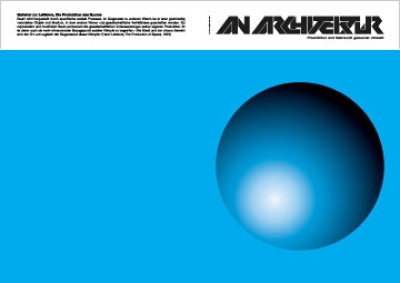
    An Architektur 04-09: Krieg und die Produktion von Raum

  • IDEA Magazine

    IDEA 296. Books <preposition> graphic design

  • IDEA Magazine

    IDEA 293. Stanley Donwood / Vacances. DD-DDD / Dimensions…

  • gerade nicht auf Lager
    An Architektur

    An Architektur 01-03

  • Pro qm

    Gutschein / Voucher

  • Siegfried Kracauer

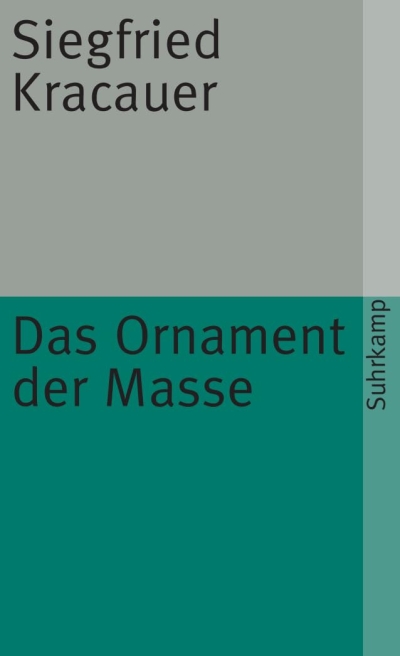
    Das Ornament der Masse. Essays

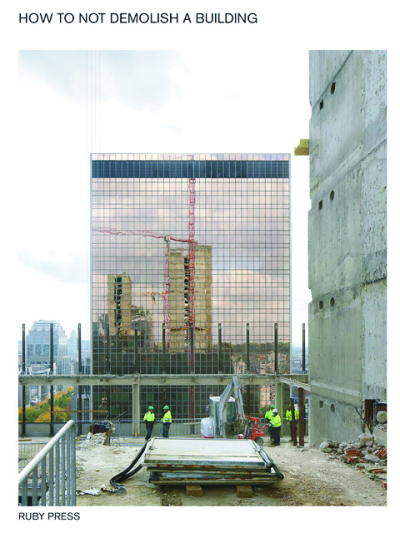
cover How to not demolish a Building

How to not demolish a Building

Many architects and engineers today believe that the most sustainable building is the one that is never demolished. The third edition of the Chapters series developed by the Belgian architecture firm 51N4E therefore tells the story of the transformation of two office towers from the 1970s according to the principles of reduce-reuse-recycle.

Against all odds, the former World Trade Center in Brussels will be repurposed in a previously unimaginable way. After many years of vacancy, the building now stands for a new approach to urban development and becomes a showcase for dealing with building fabric from the 1970s that is threatened with demolition, in a more sustainable way.

This publication tells the story of the unlikely journey to obtain the building permit, tracing the events that led to this new lease of life. Starting from the initial dream of dismantling the World Trade Center, it recounts the complex and layered process that shaped the innovative adaptive-reuse project called ZIN. 

Even if the circular, spatial, and material setup is unique to the project, the concepts and the processes behind it are not. By breaking down the complexity of its components, we can understand what has happened, and—more importantly—what could happen to other buildings as well. That is the reason this publication bares witness: to learn how to not demolish a building. 


51N4E (Hg.)
How to not demolish a Building
Ruby Press, 2023, 978-3-944074-41-2
gerade nicht auf Lager