












Direkt zum Inhalt

Warenkorb

  • gerade nicht auf Lager
    Stuart Elden, Elizabeth Lebas, Eleonore…

    Henri Lefebvre. Key Writings

  • Laurence A. Rickels

    Ulrike Ottinger. Eine Autobiografie

  • N. John Habraken, Arnulf Lüchinger

    Die Träger und die Menschen. Das Ende des Massenwohnungsbau…

  • gerade nicht auf Lager
    Liz Kotz

    Words to Be Looked at. Language in 1960s Art

  • gerade nicht auf Lager
    Guy Debord

    Comments on the Society of the Spectacle

  • Michel de Certeau

    Kunst des Handelns

  • gerade nicht auf Lager
    Jacques Ranciere

    Ist Kunst widerständig?

  • Alain Badiou

    Wofür steht der Name Sarkozy?

  • gerade nicht auf Lager
    Donna Haraway

    Die Neuerfindung der Natur. Primaten, Cyborgs und Frauen.

  • gerade nicht auf Lager
    Stefanie Schulte Strathaus, Florian…

    Wer sagt denn, dass Beton nicht brennt, hast Du’s probiert?

  • gerade nicht auf Lager
    Henri Lefebvre

    Writings on Cities

  • Loretta Napoleoni

    Rogue Economics. Capitalism's New Reality

  • AD

    AD 174. Vol. 75. Nr. 2. Samantha Hardingham. The 1970'…

  • An Architektur

    An Architektur 18: Camp for Oppositional Architecture:…

  • Johan Frederik Hartle

    Der geöffnete Raum. Zur Politik der ästhetischen Form

  • An Architektur

    An Architektur 16-17

  • Vera Beyer, Jutta Voorhoeve, Anselm…

    Das Bild ist der König. Repräsentation nach Louis Marin

  • An Architektur

    An Architektur 15 / FFM 11: Europäische…

  • An Architektur

    An Architektur 14: Camp for Oppositional Architecture

  • An Architektur

    An Architektur 11-13: Theorie und Praxis der Kartografie

  • An Architektur

    An Architektur 10: Gemeinschaftsräume

  • An Architektur

    An Architektur 04-09: Krieg und die Produktion von Raum

  • IDEA Magazine

    IDEA 296. Books <preposition> graphic design

  • IDEA Magazine

    IDEA 293. Stanley Donwood / Vacances. DD-DDD / Dimensions…

  • gerade nicht auf Lager
    An Architektur

    An Architektur 01-03

  • Pro qm

    Gutschein / Voucher

  • Siegfried Kracauer

    Das Ornament der Masse. Essays

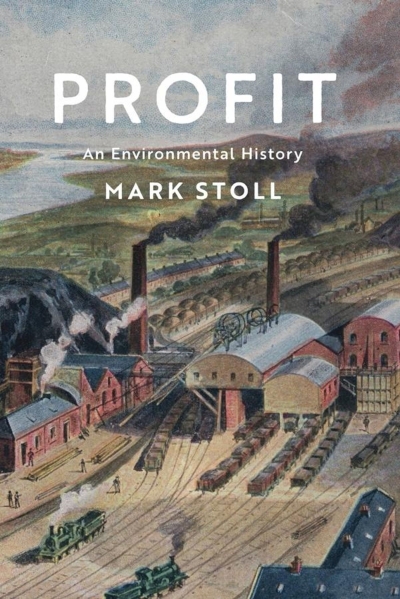
cover profit

Profit. An Environmental History

Profit - getting more out of something than you put into it -- is the original genius of homo sapiens, who learned how to unleash the energy stored in wood, exploit the land, and refashion ecosystems. As civilization developed, we found more and more ways of extracting surplus value from the earth, often deploying brutally effective methods to discipline people to do the work needed.
Historian Mark Stoll explains how capitalism supercharged this process and traces its many environmental consequences. The financial innovations of medieval Italy created trade networks that, with the European discovery of the Americas, made possible vast profits and sweeping cultural changes, to the detriment of millions of slaves and indigenous Americans; the industrial age united the world in trade and led to an energy revolution that changed lives everywhere. But when efficient production left society awash in goods, a new sort of capitalism, predicated on endless individual consumption, took its place.
This story of incredible ingenuity and villainy begins in the Doge's palace in medieval Venice and ends with Jeff Bezos aboard his own spacecraft. Mark Stoll's revolutionary account places environmental factors at the heart of capitalism's progress and reveals the long shadow of its terrible consequences.


Mark Stoll
Profit. An Environmental History
Polity Press, 2024, 9781509533244
gerade nicht auf Lager