



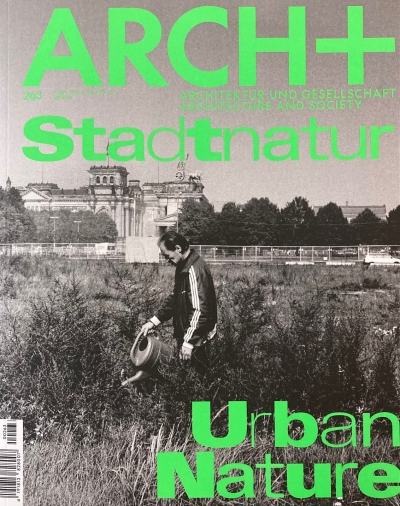
ARCH+ 263. Stadtnatur / Urban Nature
Wenn von Stadtnatur die Rede ist, erscheint sie oft als grünes Add-on: als Ausgleich städtischer Defizite, als technische Lösung im Zeichen der Klimaanpassung oder als ästhetische Aufwertung. Ein solches Verständnis verengt den Blick. Es reduziert Natur auf Funktion und verkennt, dass Städte längst ökologische Gefüge sind, in denen Boden, Wasser, Pflanzen, Infrastrukturen und politische Entscheidungen untrennbar ineinandergreifen. Stadtnatur ist kein nachträgliches Korrektiv der Stadt, sondern Ausdruck ihrer materiellen, sozialen und historischen Bedingungen.
Stadtnatur | Urban Nature verschiebt daher die Perspektive: weg von der Vorstellung urbaner Natur als dekorativer oder kompensatorischer Maßnahme, hin zu ihrem Verständnis als politischem und demokratischem Projekt. Im Zentrum stehen Fragen nach Boden, ökologischer Gerechtigkeit und der Rolle der Gestaltungsdisziplinen – insbesondere der Landschaftsarchitektur – im Anthropozän. Stadtnatur erscheint hier als kollektive Ressource und Konfliktfeld, auf dem die sozialökologische Zukunft der Stadt verhandelt wird.
---
When urban nature is invoked, it often appears as a green add-on: a remedy for urban deficits, a technical solution in the context of climate adaptation, or an aesthetic upgrade. Such a view narrows the perspective. It reduces nature to a function and obscures the fact that cities are already ecological formations in which soil, water, plants, infrastructures, and political decisions are inseparably intertwined. Urban nature is not a retrospective corrective to the city, but an expression of its material, social, and historical conditions.
Stadtnatur | Urban Nature therefore proposes a shift in perspective: away from conceiving urban nature as decorative embellishment or compensatory measure, toward understanding it as a political and democratic project. Central to this inquiry are questions of soil, ecological justice, and the role of the design disciplines—particularly landscape architecture—in the Anthropocene. Urban nature emerges here as both a collective resource and a site of conflict, where the socio-ecological future of the city is negotiated.