




Direkt zum Inhalt

Warenkorb

  • Alain Badiou

    Wofür steht der Name Sarkozy?

  • gerade nicht auf Lager
    Donna Haraway

    Die Neuerfindung der Natur. Primaten, Cyborgs und Frauen.

  • gerade nicht auf Lager
    Stefanie Schulte Strathaus, Florian…

    Wer sagt denn, dass Beton nicht brennt, hast Du’s probiert?

  • gerade nicht auf Lager
    Henri Lefebvre

    Writings on Cities

  • Loretta Napoleoni

    Rogue Economics. Capitalism's New Reality

  • AD

    AD 174. Vol. 75. Nr. 2. Samantha Hardingham. The 1970'…

  • An Architektur

    An Architektur 18: Camp for Oppositional Architecture:…

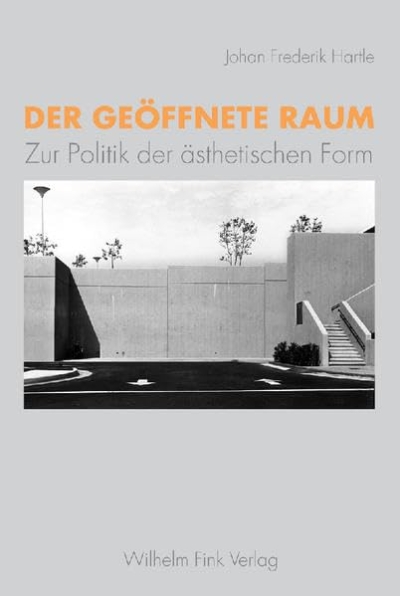
  • Johan Frederik Hartle

    Der geöffnete Raum. Zur Politik der ästhetischen Form

  • An Architektur

    An Architektur 16-17

  • Vera Beyer, Jutta Voorhoeve, Anselm…

    Das Bild ist der König. Repräsentation nach Louis Marin

  • An Architektur

    An Architektur 15 / FFM 11: Europäische…

  • An Architektur

    An Architektur 14: Camp for Oppositional Architecture

  • An Architektur

    An Architektur 11-13: Theorie und Praxis der Kartografie

  • An Architektur

    An Architektur 10: Gemeinschaftsräume

  • An Architektur

    An Architektur 04-09: Krieg und die Produktion von Raum

  • IDEA Magazine

    IDEA 296. Books <preposition> graphic design

  • IDEA Magazine

    IDEA 293. Stanley Donwood / Vacances. DD-DDD / Dimensions…

  • gerade nicht auf Lager
    An Architektur

    An Architektur 01-03

  • Pro qm

    Gutschein / Voucher

  • Siegfried Kracauer

    Das Ornament der Masse. Essays

Futurethoughts. Critical histories of philosophy (CRMEP Books 6)

It is commonplace to note that, unlike analytical philosophy, modern European or so-called ‘continental’ philosophy operates with a conception of philosophy as a practice that is in large part constituted through its ongoing relations to its own history. It is less commonplace, however, to include in this thought not only broader, ‘non-philosophical’ social contexts (colonialism and industrial capitalism), but also the disciplinary and other institutional mediations through which such contexts are categorially filtered, as forms of knowledge, on their way to encountering philosophical reflection. Reflection on this fact draws attention to philosophy as a transdisciplinary as well as a historical practice. The writings in this collection – organized according to the institutional genres of the presentations within CRMEP from which they derive – revisit some of these encounters of philosophy with its constitutive boundaries.


Peter Osborne (ed.)
Futurethoughts. Critical histories of philosophy (CRMEP Books 6)
CRMEP Books, 2024, 9781739145187
16,00 €