













Direkt zum Inhalt

Warenkorb

  • Geert Lovink

    Die Brutalität der Plattform. Von der radikalen Kritik zum…

  • Sung Hong Kim

    Seoul Urban Architecture. Rising from the Crushing Bowl

  • Paul Virilio

    Paul Virilio. Bunker Archaeology

  • gerade nicht auf Lager
    Fatima-Zahra Lakrissa

    Turning Frozen Yesterdays into Fluid Now... Or how to…

  • Christopher Turner

    Tropical Modernism. Architecture and Independence

  • Spike

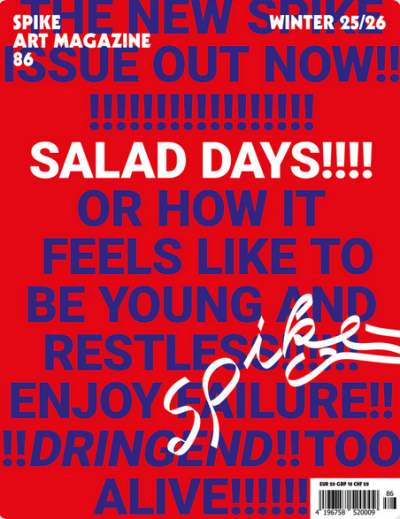
    Spike Art Magazine Issue 86 Salad Days

  • Benze De Ream

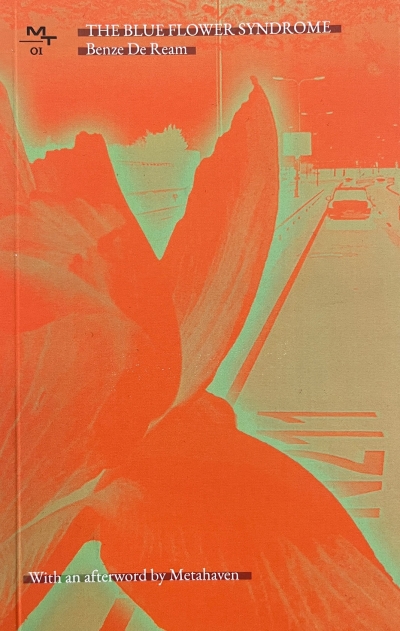
    The Blue Flower Syndrome. Multithread 01. Benze de Ream

  • gerade nicht auf Lager
    Nora O'Murchú, Janez Fakin Janša

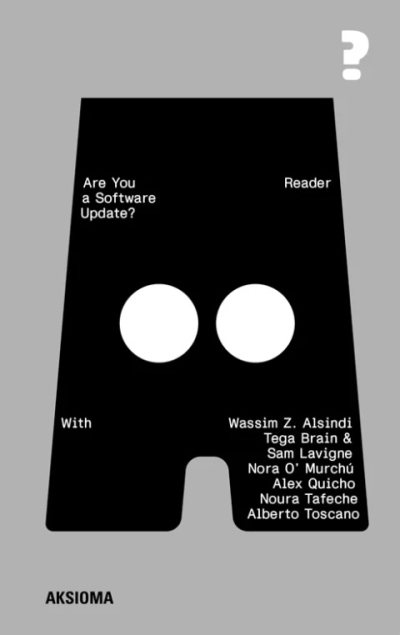
    Are You a Software Update? Reader with Wassim Z. Alsindi,…

  • Kenneth Hujer

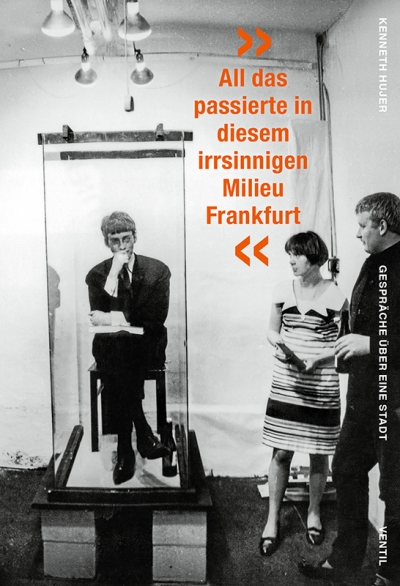
    »All das passierte in diesem irrsinnigen Milieu Frankfurt«.…

  • gerade nicht auf Lager
    Marius Babias (Hg.)

    Portrait Mode. Moyra Davey

  • Valentina Tanni

    Exit Reality. Vaporwave, Backrooms, Weirdcore, and Other…

  • Alexander Schröder, Dominic Eichler,…

    MD72. Door Slamming Festival (2007 - 2018)

  • Marek Poliks & Roberto Alonso…

    Exocapitalism. Economies with absolutely no limits

  • gerade nicht auf Lager
    Diedrich Diederichsen, hg. von Carolin…

    Ästhetik im Planetarischen Zeitalter

  • Christoph Liepach (Hg)

    Gera ostmodern

  • Christoph Liepach, Irina Schultheiß (Hg)

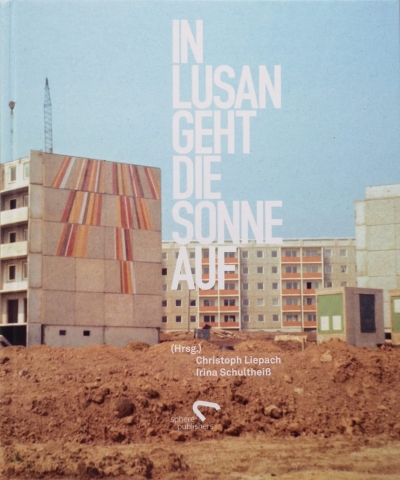
    In Lusan geht die Sonne auf

  • Elena Malzew, Lisa Klosterkötter (Ed.)

    Über Brücken - Bridging

  • Birgitta Heid

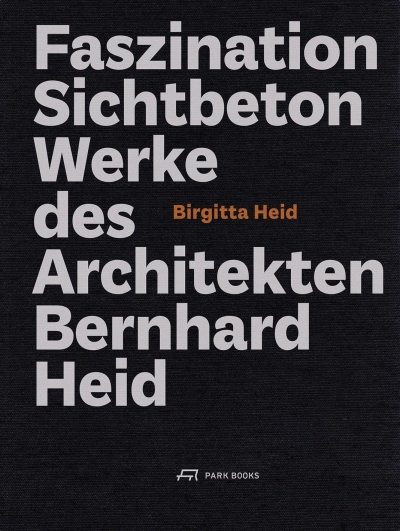
    Faszination Sichtbeton. Werke des Architekten Bernhard Heid

  • dérive

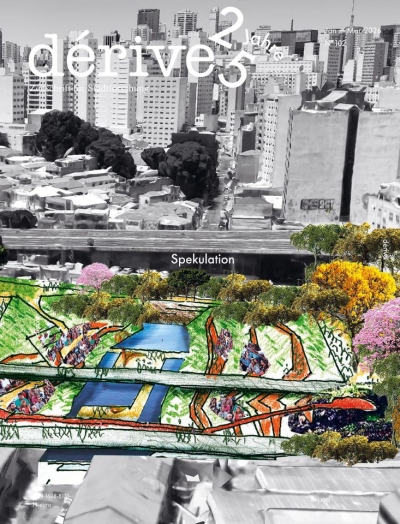
    dérive N° 102, Spekulation (Jan - Mar 2026)

  • Michael Klipphahn-Karge

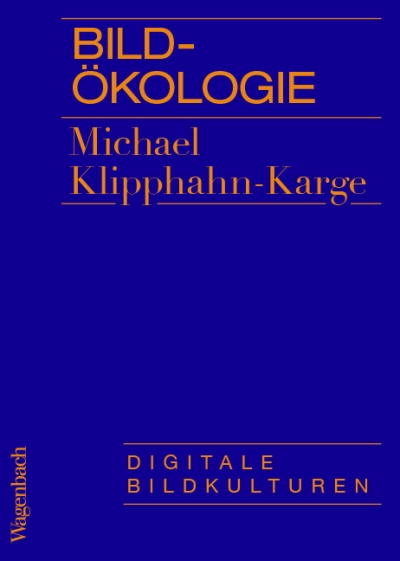
    Bildökologie (Digitale Bildkulturen)

  • Kayoung Kim, Lisa Marie Zander, Marius…

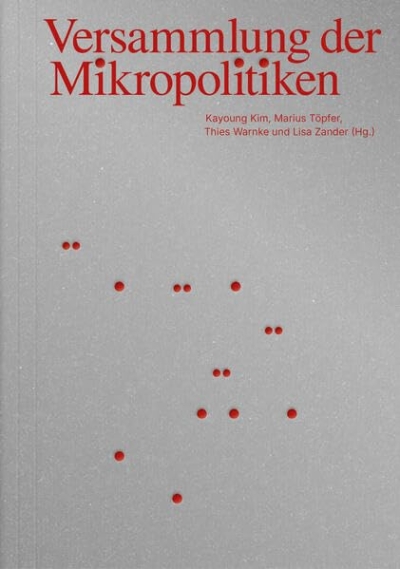
    Versammlung der Mikropolitiken

  • Jiyoung Yoon, Kirenia Martinez Acosta

    Invisible Tapestry Vol. 2.

  • TAT.

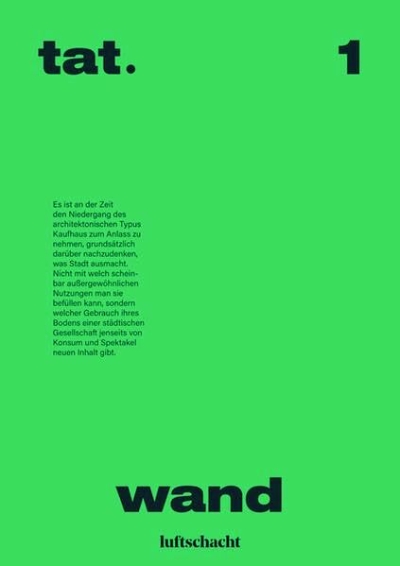
    TAT.1 - Wand / Wall

  • Ita Dreyfus

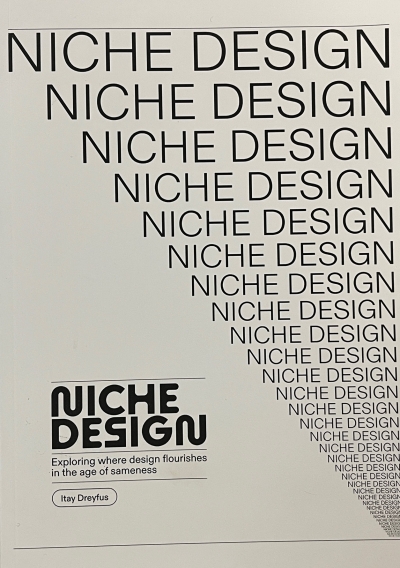
    Niche Design. A Magazine exploring where design flourishes…

  • Christoph Liepach (Hg)

    Max braucht Gesellschaft. Der Kulturpalast des VEB Maxhütte…

  • gerade nicht auf Lager
    Melissa Bruntlett, Chris Bruntlett

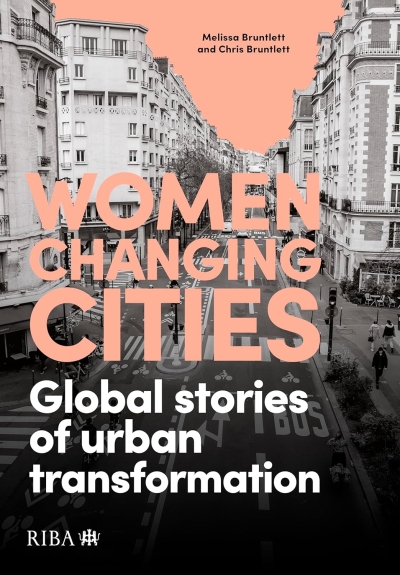
    Women Changing Cities. Global stories of urban…

  • Grga Bašić, Neil Brenner, Mariano Gomez…

    Data-Spheres of Planetary Urbanization

  • gerade nicht auf Lager
    Caspar Henderson

    A Book of Noises. Notes on the Auraculous

  • Eva Illouz

    Explosive Moderne

  • Louis Möckel

    Sonic Footprints. Ecology of Technophony

  • Forum Stadt - Netzwerk historische…

    Forum Stadt 3.2025 – Home Sweet Home

  • Jan Engelke

    Das große Ziel: ein kleines Haus. Schöner Wohnen und das…

  • gerade nicht auf Lager
    Sarah Robinson

    Architecture of Resonance. From Objects to Interactions

  • Anna Pollmann, Christopher Möllmann (Hg)

    Schlüsselbegriffe gesellschaftlichen Zusammenhalts. Ein…

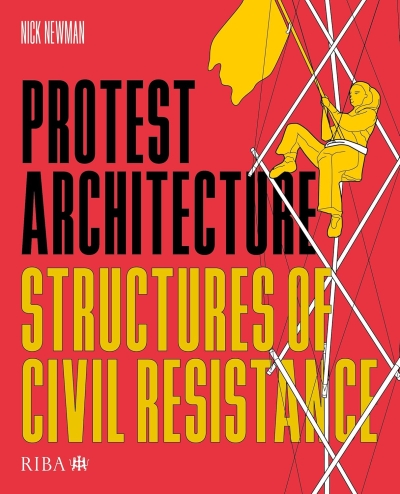
  • Nick Newman

    Protest Architecture. Structures of civil resistance

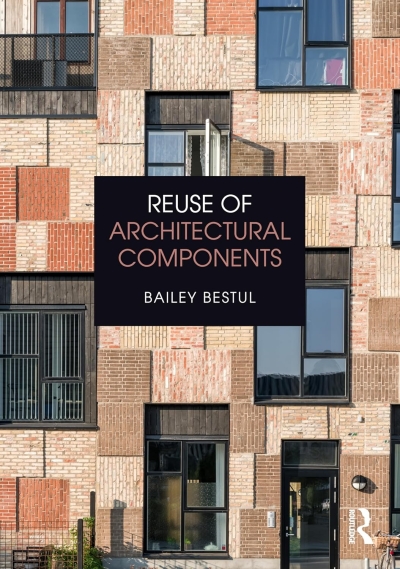
  • Bailey Bestul

    Reuse of Architectural Components

  • gerade nicht auf Lager
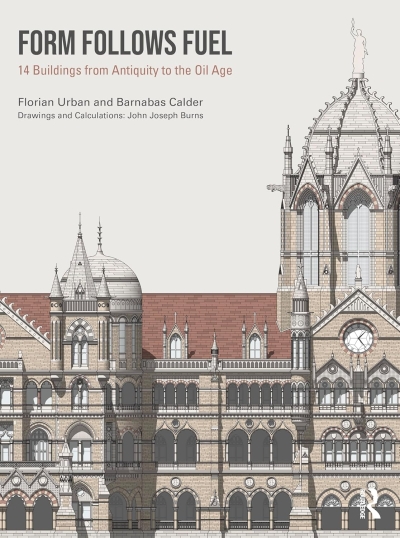
    Florian Urban, Barnabas Calder

    Form Follows Fuel. 14 Buildings from Antiquity to the Oil…

  • Market Cafe

    Market Cafe Magazine Issue 9 Invisible Data

  • gerade nicht auf Lager
    Mario Mainetti (Hg)

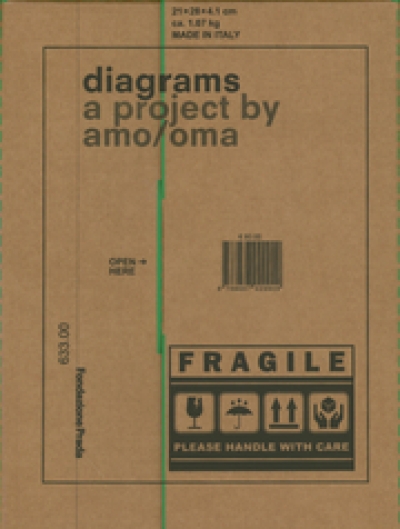
    Diagrams. A Project by AMO/OMA

  • gerade nicht auf Lager
    Chris Kraus

    The Four Spent the Day Together

  • gerade nicht auf Lager
    Nick Srnicek

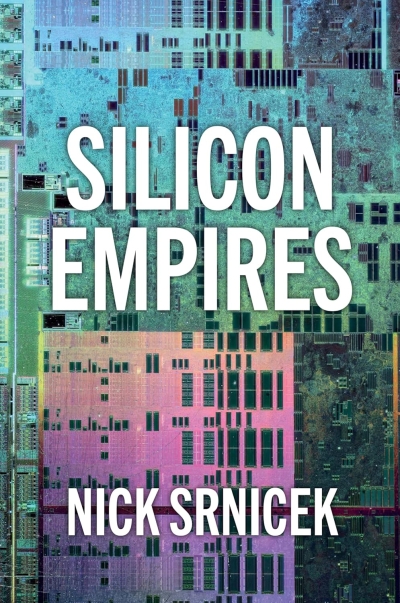
    Silicon Empires. The Fight for the Future of AI

  • gerade nicht auf Lager
    Palais Sinclaire, Achim Szepanski (Hg)

    Ultrablack of Music. Volume 2

  • Christian Dehli, Andrea Grolimund (Eds.)

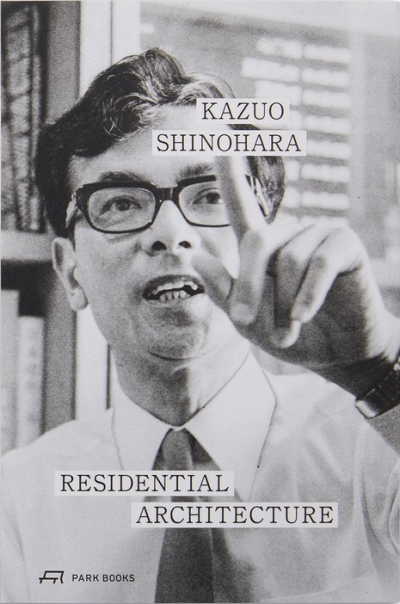
    Kazuo Shinohara. Residential Architecture

  • Sofia Lemos (Hg)

    Reluctant Gardener

  • Britt Müller, Winnes Rademächers

    Don't Sleep. The Graphic Language of Vinyl Labels

  • Judith Siegmund

    Künstlerisches Handeln in digitalen und postkolonialen…

  • Friedrich Kittler, Alexander Kluge,…

    Raketenbilder

  • Francisco Gallardo & Audrey Samson…

    EURO—VISION. Undergrounding the Critical Mineral

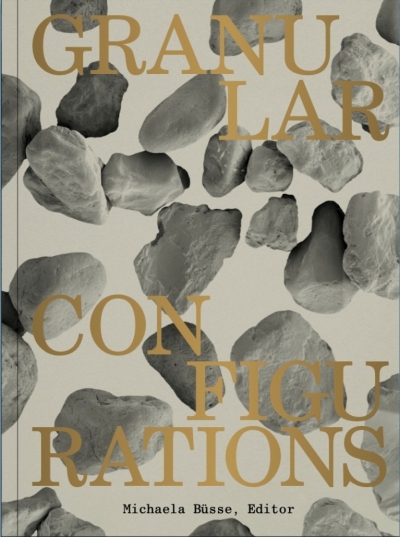
  • Michaela Büsse (Hg)

    Granular Configurations. Sand, Materiality, and Planetary…

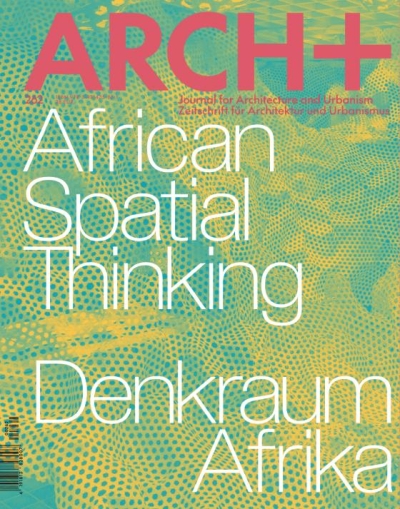
  • Arch+

    ARCH+ 262. African Spatial Thinking / Denkraum Afrika

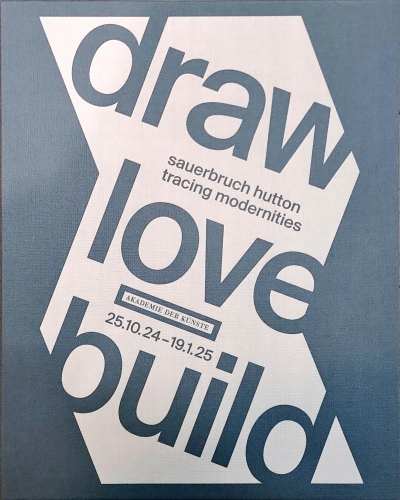
  • Matthias Sauerbruch, Louisa Hutton, mit…

    Draw Love Build. Sauerbruch Hutton Tracing Modernities

  • Mark Griffiths

    Checkpoint 300. Colonial Space in Palestine

  • Katharina Weinstock

    Post-Readymade

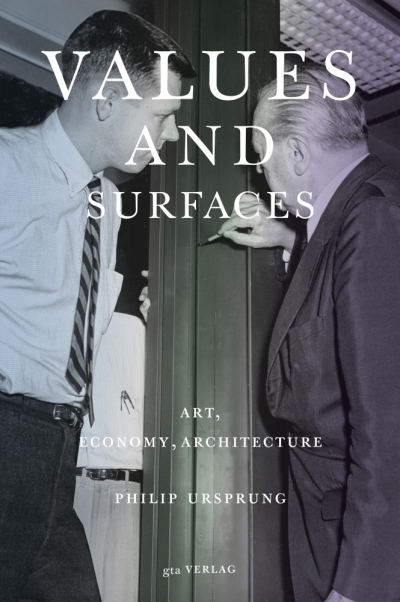
  • Philip Ursprung

    Values and Surfaces. Art, Economy, Architecture

  • gerade nicht auf Lager
    Hg. von Benedikt Boucsein, Matthias…

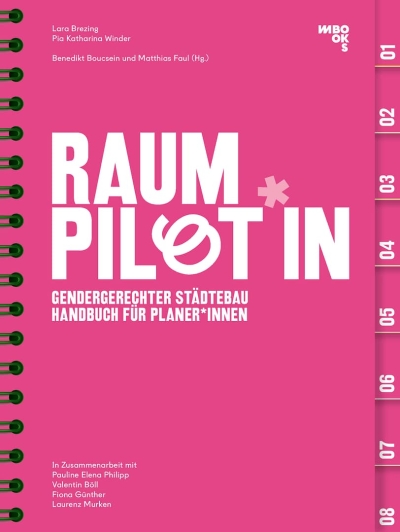
    Raumpilot*in. Gendergerechter Städtebau. Handbuch für…

  • Ott Kagovere, Hanan Mahbouba, Jaroslav…

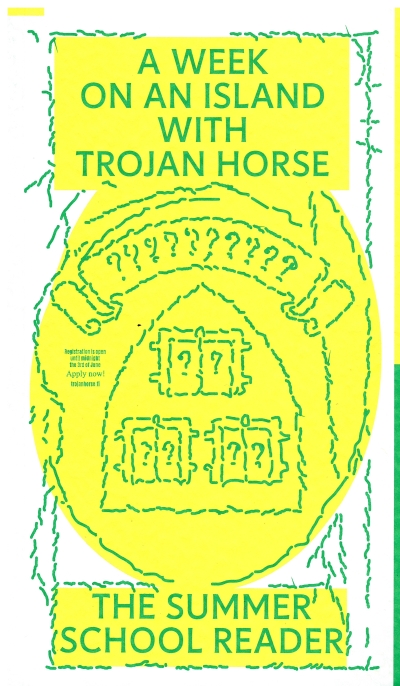
    A Week On An Island With Trojan Horse. The Summer School…

  • IDEA Magazine

    Idea 412. Tomoyuki Arima: Design Evolving from Relationships

  • space for relational research (eds.):…

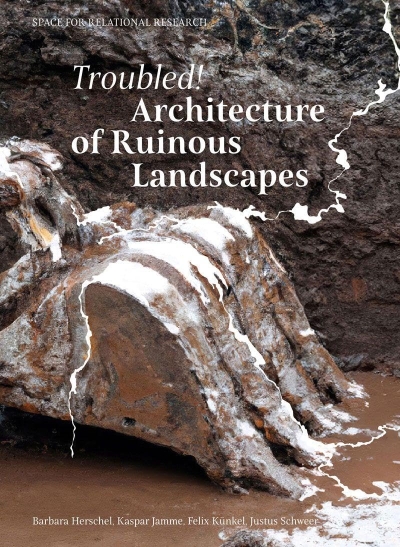
    Troubled! Architecture of Ruinous Landscapes

  • David Wojnarowicz

    Waterfront Journals

  • Heike Baranowsky

    At the Still Point

  • Anaïs Auprêtre de Lagenest, Andreas…

    Wohnen fürs Wohnen. Schweizer Wohnbaugenossenschaften als…

  • Ayoung Kim

    Synthetic Storyteller

  • gerade nicht auf Lager
    Magda Danysz

    Street Art. An Anthology

  • Karen van den Berg

    Große Kunst. Hyperwachstum in der Studiopraxis

  • gerade nicht auf Lager
    Chris Hables Gray

    Virus is a Language. AI, QAnon, COVID-19 and the New…

  • Jan Schwochow

    InGraphics 2026 Edition

  • David Reinfurt

    A *Co-* Program for Graphic Design

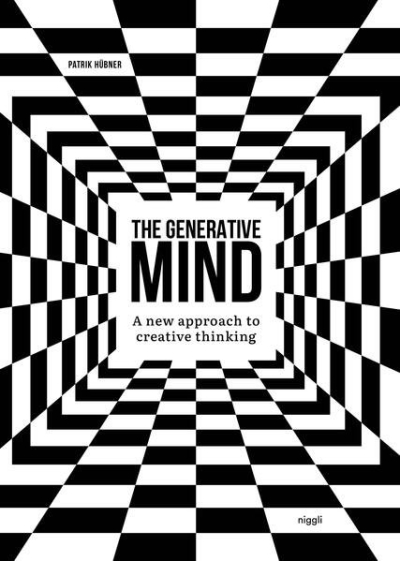
  • Patrik Hübner

    The Generative Mind. A New Approach to Creative Thinking

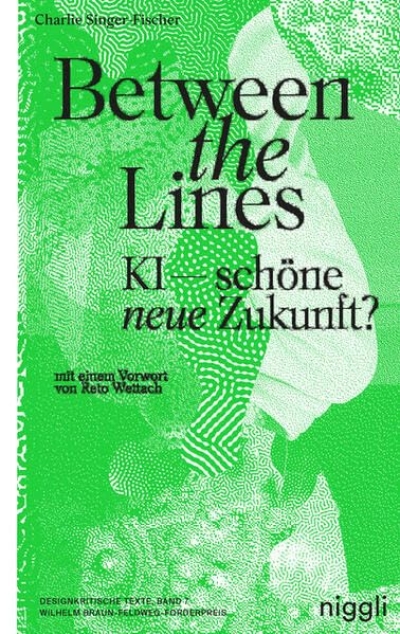
  • Charlie Singer-Fischer

    Between the Lines. KI - schöne neue Zukunft?

  • gerade nicht auf Lager
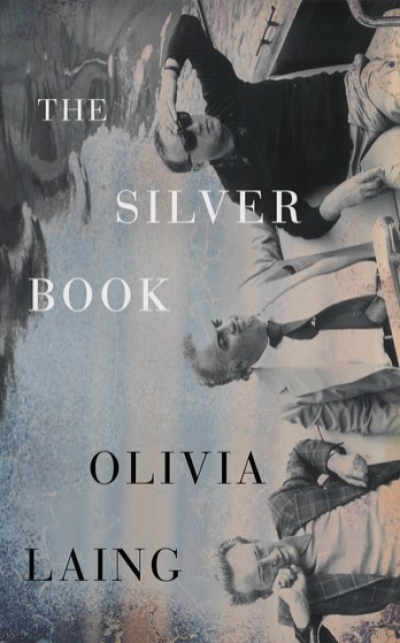
    Olivia Laing

    The Silver Book

  • gerade nicht auf Lager
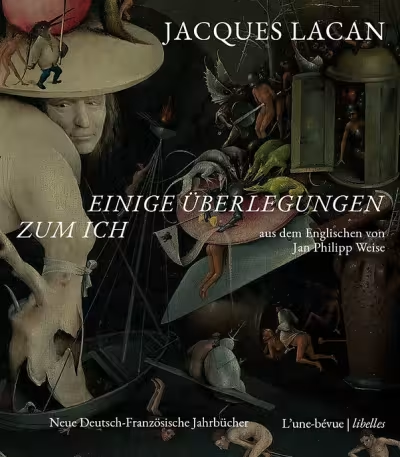
    Jacques Lacan

    Einige Überlegungen zum Ich. Some Reflections on the Ego

  • Rosetta S. Elkin

    Landscapes of Retreat

  • gerade nicht auf Lager
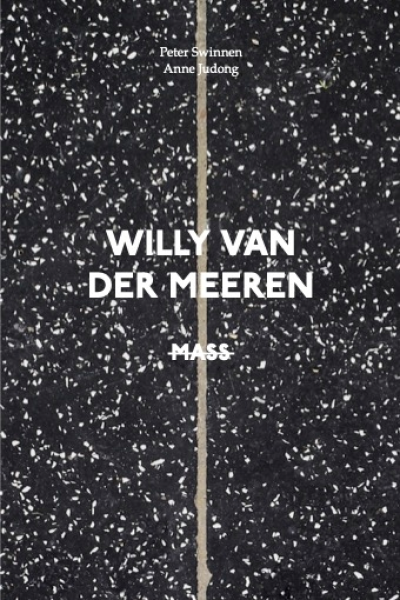
    Peter Swinnen, Anne Judong (eds.)

    Willy Van Der Meeren. Mass

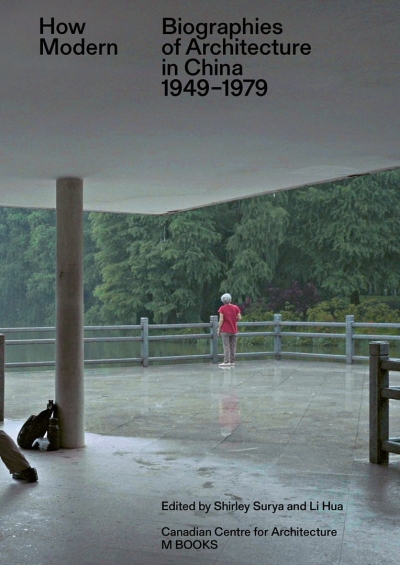
  • Shirley Surya, Li Hua (Eds.) Canadian…

    How Modern. Biographies of Architecture in China 1949–1979

  • gerade nicht auf Lager
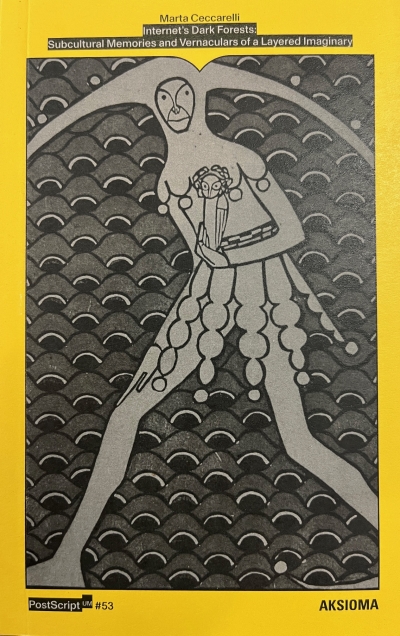
    Marta Ceccarelli

    Postscriptum 53. Internet's Dark Forests: Subcultural…

  • gerade nicht auf Lager
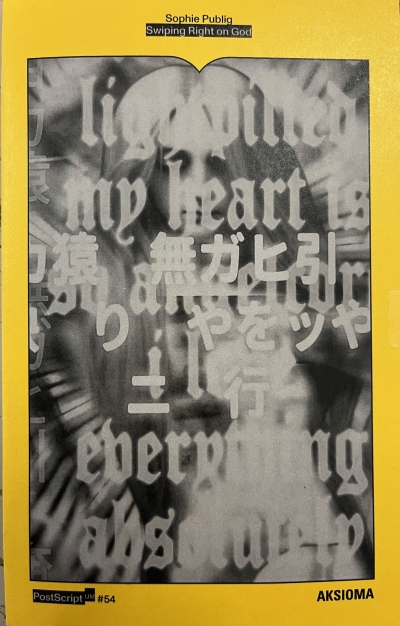
    Sophie Publig

    The Postscriptum 54: Swiping Right on God

  • Dave Randall

    Sound System. The Political Power of Music

  • Mikkel Bolt Rasmussen

    The Refusalist International. A Theory of the New Protest…

  • Esra Akcan

    Architecture and the Right to Heal. Resettler Nationalism…

  • Kerstin Decker (Autorin), Ute Müller…

    Das Graue Kloster von Berlin. Biografie eines…

  • Okwui Enwezor, Terry Smith (Ed.)

    Okwui Enwezor. Selected Writings. Volume 2. Curating the…

  • Okwui Enwezor, Terry Smith (Ed.)

    Okwui Enwezor. Selected Writings. Volume 1. Toward a New…

  • Benedikt Boucsein, Elettra Carnelli,…

    Die Macht der Bedingungen. Architektur zwischen…

  • Jeppe Ugelvig (Ed.)

    Viscose Journal 01. Style (Reprint)

  • gerade nicht auf Lager
    Paul O'Neill

    Not Going It Alone: Collective Curatorial Curating

  • Giulia Boller, Matthias Beckh, Rainer…

    Heinz Isler. Built Experiments – Entrepreneurial Networks

  • Carolyn F. Strauss (ed.)

    Slow Technology Reader

  • gerade nicht auf Lager
    Geert Lovink

    Platform Brutality. Closing Down Internet Toxicity

  • gerade nicht auf Lager
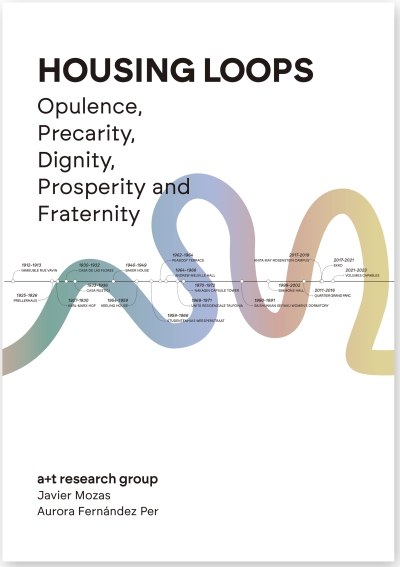
    Javier Mozas, Aurora Fernández Per

    Housing Loops. Opulence, Precarity, Dignity, Prosperity and…

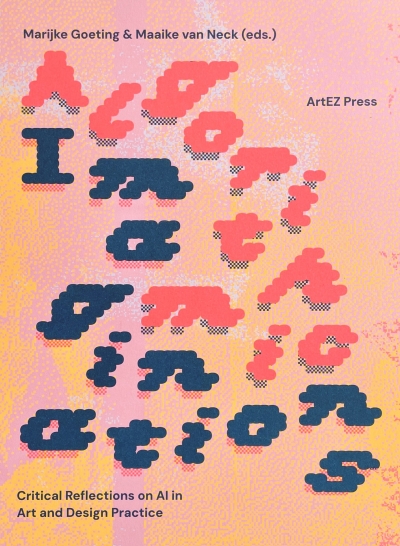
  • Marijke Goeting & Maaike van Neck…

    Algorithmic Imaginations. Critical Reflections on AI in Art…

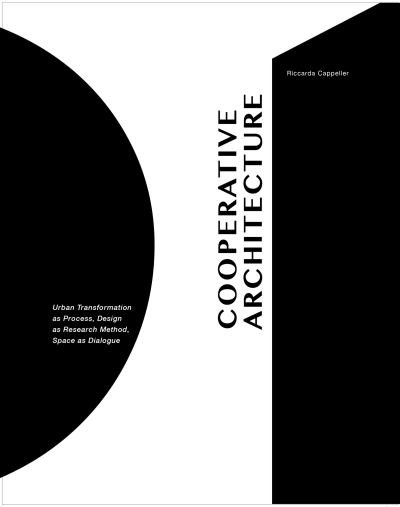
  • Riccarda Cappeller

    Cooperative Architecture. Urban Transformation as Process,…

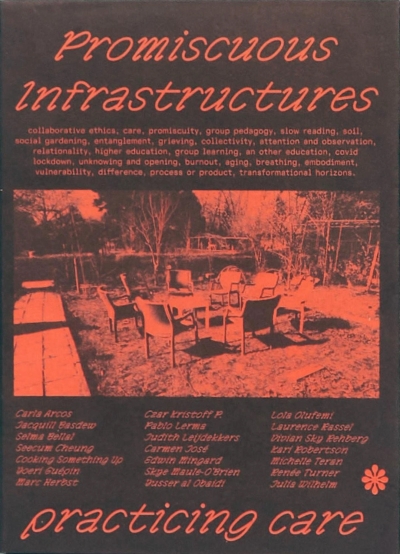
  • Michelle Teran, Marc Herbst, Vivian Sky…

    Promiscuous Infrastructures. Practising Care

  • Camille Belmin (Ed)

    Ecoslay – An Anthology

  • Meltdown Your Books

    Empires Over Skin. How we Fashioned our World

  • gerade nicht auf Lager
    Claus Krieger

    111 Architekturbaukästen

  • Basile Baudez, Victoria Bergbauer (Hg.)

    Carceral Architecture

  • Cornelia Wild (Hrsg.), Pier Paolo…

    Dialoge mit Pasolini

  • Charlotte Laubard

    Manifestes 8. Changing Art from the Outside in

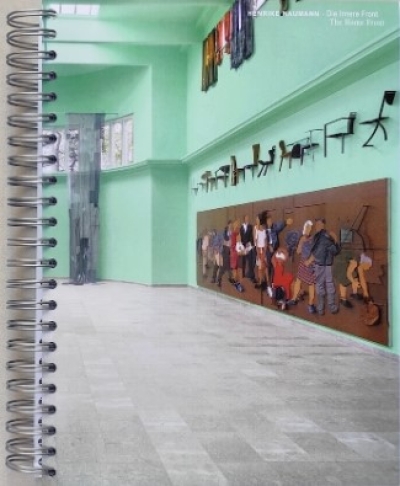
Cover Henrike Naumann. Die Innere Front. The Home Front

Henrike Naumann. Die Innere Front. The Home Front

German/English mit Texten von/with texts by Clemens Villinger, Kerstin Stakemeier. Design by Johannes Büttner

Die Publikation erscheint unabhängig als Materialsammlung zu Henrike Naumanns Beitrag für die Ausstellung RUIN im Deutschen Pavillon der diesjährigen Venedig Biennale (Kuratorin: Kathleen Reinhardt; Künstlerinnen: Henrike Naumann, Sung Tieu).

Sie hat keinen klaren Anfang und kein Ende. Beim ‚Forever‘-Umrunden der Seiten entlang der Spiralbindung entstehen neue Verknüpfungen, Fragmente verschieben sich, Bedeutungen kippen, Gesehenes erscheint in der Wiederholung anders. Klare Lesarten verweigern sich. Das zusammengetragene Material wird kontextualisiert und verwirrt gleichzeitig. Es ist ‚ungemütlich‘, ähnlich wie Henrike Naumann ihren Beitrag bezeichnete. Es zeigt sich eine dichte künstlerische Praxis, die nicht bewusst abgeschlossen werden konnte, sondern durch ein abruptes Ende bestimmt ist.

Als Materialsammlung werden verschiedene Elemente und Ansätze aus dem gesamten Arbeitsprozess zusammengeführt. Einmal die Hieroglyphen, die Henrike Naumann als Glossar und eigenes Zeichensystem beschrieb, teilweise begleitet von Texten von Clemens Villinger. Dazu kommt das umfangreiche ‚masterplan.key‘, ein fortlaufend bearbeitetes Dokument, mit dem sie vor über einem Jahr begann, um Ideen und Verknüpfungen zu sammeln. Es half ihr konzeptionelle Ansätze und Brüche zu entwickeln, sowie ihre Notizen und Denkprozesse aus den Skizzen und intensiven Recherchen zu visualisieren. Darunter der erste Konzeptentwurf aus dem Bewerbungsprozess.

Ähnlich wie bei ihrer Praxis der ‚Konzeptpapiere‘ nutzte Henrike ‚masterplan.key‘ als internes konzeptionelles Dokument, in dem sie Collagen und Manipulationen entwickelte, um das Material und die übereinanderliegenden Kontexte zu bändigen. Die Seitengröße des Dokuments orientiert sich an dem Laptopbildschirm, vor dem man mit ihr saß, während sie eine ihrer Keynote-Präsentationen durchklickte, um den künstlerischen Prozess in einem Projekt zu erläutern.

Die Sammlung enthält weiterhin Naumanns Konzepttextskizzen und einen Text von Kerstin Stakemeier. Dazu kommen einzelne Objektaufnahmen der Hieroglyphen, die noch in Naumanns Studio entstanden waren, sowie Ausstellungsansichten aus Venedig. Der Künstler Johannes Büttner entwickelte die konzeptionelle und grafischen Umsetzung der Publikation.

Die Materialsammlung war nicht mehr von Henrike Naumann geplant gewesen. Die Herausgeber:innen entschieden sich zur Veröffentlichung, um an ihren gewählten Schritt einer Sichtbarmachung von Ideen, Ansätzen und Recherchen anzuknüpfen, den sie mit dem Metallordner CONCEPTS eingeschlagen hatte. Die breite Vermittlung ihrer Arbeit war Henrike Naumann immer besonders wichtig, das Offenlegen ihrer Recherchelinien und Denkprozesse zu ihrem Pavillonbeitrag versucht diese Motivation so gut wie möglich zu unterstützen.

Es ist ein offenes Dokument entstanden, das Einblick gibt, aber vor allem herausfordert und zum Weiterdenken provoziert.

————————————————————————————————

This publication is an independently released collection of materials relating to Henrike Naumann’s contribution to the exhibition RUIN in the German Pavilion at this year’s Venice Biennale (curator: Kathleen Reinhardt; artists: Henrike Naumann, Sung Tieu).

It has no clear beginning or end. As one ‘forever’ turns the pages along the spiral binding, new connections emerge, fragments and meanings shift, and what has been seen appears different in repetitions. Clear interpretations elude the reader. The compiled material is both contextualizing and bewildering at the same time. It is ‘uncomfortable’, much as Henrike Naumann described her work in the pavilion. What emerges is a dense artistic practice that could not be consciously brought to a close, but is instead defined by an abrupt ending.

As a collection of material, various elements and approaches from the entire working process are brought together. Firstly, the hieroglyphs, which Henrike Naumann described as a glossary and a sign system in her own right, partly accompanied by texts by Clemens Villinger. Added to this is the extensive ‘masterplan.key’, a document that she constantly updated, and began working on over a year ago to collect ideas and connections. It helped her to develop conceptual approaches and disruptions, as well as to visualise her notes and thought processes drawn from the sketches and her intensive research. Among these is the first conceptual draft from the application procedure.

Much like her practice of ‘concept papers’, Henrike used ‘masterplan.key’ as an internal conceptual document in which she developed collages and manipulations to bring the material and the overlapping contexts ‘under control’. The page size of the document is based on the laptop screen in front of which one sat with her whilst she clicked through one of her Keynote presentations to explain the artistic process in a project.

The collection also includes Naumann’s conceptual text sketches and a text by Kerstin Stakemeier. In addition, there are individual photographs of the hieroglyphs, taken whilst they were still in Naumann’s studio, as well as exhibition views from Venice. The artist Johannes Büttner developed the conceptual and graphic design of the publication.

The collection of materials had not originally been planned by Henrike Naumann. The editors decided to publish it shortly before the opening in order to build on the approach she had adopted – that of bringing ideas, approaches and research to light – which she had embarked upon with the metal folder CONCEPTS. Communicating and mediating the work widely has always been particularly important to her; the disclosure of her lines of research and thoughts relating to her pavilion contribution seeks to support this motivation as effectively as possible.

The result is an open document that provides insight, but above all challenges the reader and provokes to further continue these approaches.


Studio Henrike Naumann
Henrike Naumann. Die Innere Front. The Home Front
Bierke Verlag, 2026, 978-3-948546-70-0
38,00 €