









Direkt zum Inhalt

Warenkorb

  • Alain Badiou

    Wofür steht der Name Sarkozy?

  • gerade nicht auf Lager
    Donna Haraway

    Die Neuerfindung der Natur. Primaten, Cyborgs und Frauen.

  • gerade nicht auf Lager
    Stefanie Schulte Strathaus, Florian…

    Wer sagt denn, dass Beton nicht brennt, hast Du’s probiert?

  • gerade nicht auf Lager
    Henri Lefebvre

    Writings on Cities

  • Loretta Napoleoni

    Rogue Economics. Capitalism's New Reality

  • AD

    AD 174. Vol. 75. Nr. 2. Samantha Hardingham. The 1970'…

  • An Architektur

    An Architektur 18: Camp for Oppositional Architecture:…

  • Johan Frederik Hartle

    Der geöffnete Raum. Zur Politik der ästhetischen Form

  • An Architektur

    An Architektur 16-17

  • Vera Beyer, Jutta Voorhoeve, Anselm…

    Das Bild ist der König. Repräsentation nach Louis Marin

  • An Architektur

    An Architektur 15 / FFM 11: Europäische…

  • An Architektur

    An Architektur 14: Camp for Oppositional Architecture

  • An Architektur

    An Architektur 11-13: Theorie und Praxis der Kartografie

  • An Architektur

    An Architektur 10: Gemeinschaftsräume

  • An Architektur

    An Architektur 04-09: Krieg und die Produktion von Raum

  • IDEA Magazine

    IDEA 296. Books <preposition> graphic design

  • IDEA Magazine

    IDEA 293. Stanley Donwood / Vacances. DD-DDD / Dimensions…

  • gerade nicht auf Lager
    An Architektur

    An Architektur 01-03

  • Pro qm

    Gutschein / Voucher

  • Siegfried Kracauer

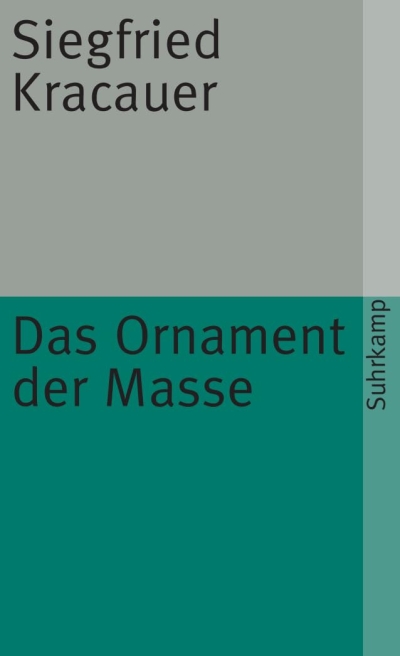
    Das Ornament der Masse. Essays

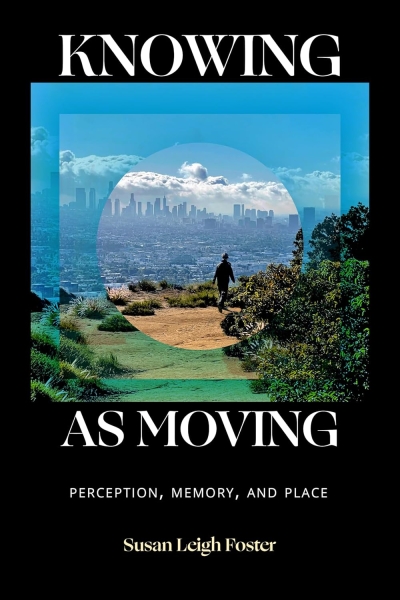
Knowing as Moving. Perception, Memory, and Place.

In Knowing as Moving, Susan Leigh Foster theorizes how the act of moving in and through the world creates the potential for individual and collective bodies to connect. Starting from the assertion that knowing takes place through bodily movement, Foster moves away from the Western philosophical traditions of dance, critiquing the Cartesian mind-body duality and its colonizing politics. She draws on Native and Indigenous studies, ecological cognitive science, disability studies, phenomenology, and new materialism to explore how knowledge is neither static nor storable. Thinking is a physical action and the product of an entire neuromuscular system with its mobile postural and gestural configurations, perceptual systems, and brain activity. Foster outlines how reading, examining, talking, and remembering are all forms of moving and contends that any process of knowing establishes one’s identity and relationality. By focusing on the centrality of bodily movement to thought and self, she contributes a decolonial critique of the study of knowledge and being. In so doing, Foster replaces the Cartesian-colonial “I think, therefore I am” with a decolonial “I move, and therefore I know.”


Susan Leigh Foster
Knowing as Moving. Perception, Memory, and Place.
Duke University Press, 2025, 9781478032144
gerade nicht auf Lager