
















Direkt zum Inhalt

Warenkorb

  • Paul Hanford

    Coming to Berlin

  • gerade nicht auf Lager
    Boris Buden

    Transition to Nowhere. Art in History After 1989

  • Tirdad Zolghadr (Hg)

    REALTY. Beyond the Traditional Blueprints of Art &…

  • gerade nicht auf Lager
    Albena Yaneva

    Latour for Architects

  • gerade nicht auf Lager
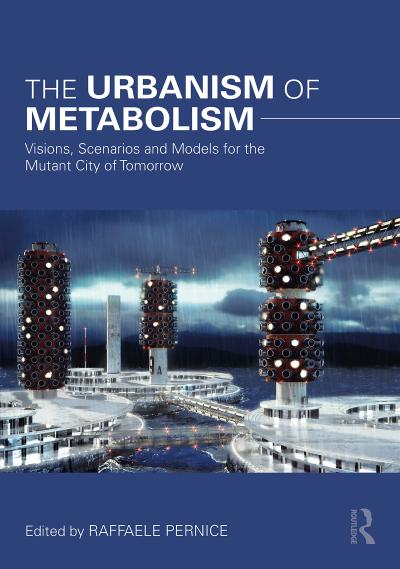
    Raffaele Pernice (Hg)

    The Urbanism of Metabolism. Visions, Scenarios and Models…

  • gerade nicht auf Lager
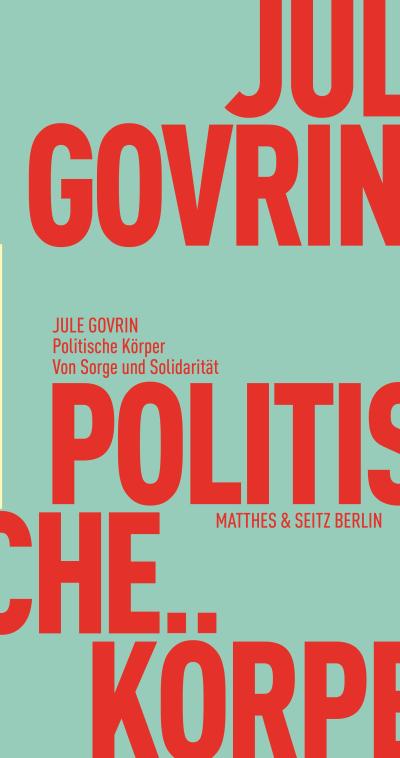
    Jule Govrin

    Politische Körper. Von Sorge und Solidarität

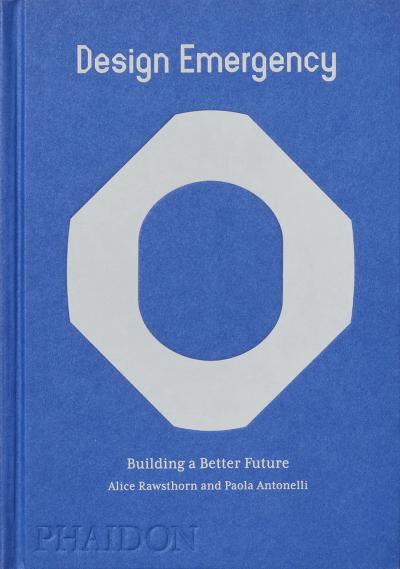
  • Alice Rawsthorn, Paola Antonelli

    Design Emergency: Building a Better Future

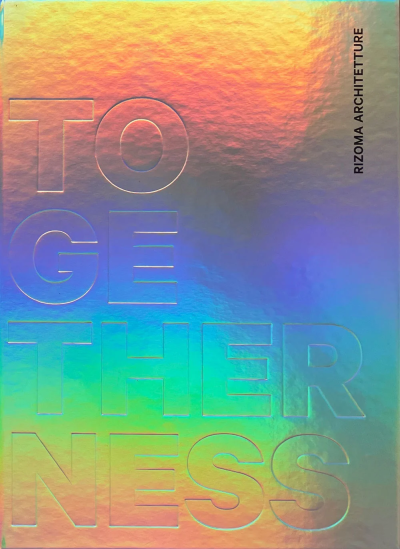
  • Carlotta Zucchini (Ed.)

    Rizoma Architetture. Togetherness

  • gerade nicht auf Lager
    Robert Stürzl

    Hans-Walter Müller und das lebendige Haus

  • Kenny Cupers, Sophie Oldfield, Manuel…

    What Is Critical Urbanism? Urban Research as Pedagogy

  • gerade nicht auf Lager
    Geert Lovink

    Stuck on the Platform. Reclaiming the Internet

  • gerade nicht auf Lager
    Friedrich von Borries, Jens-Uwe Fischer

    Gefangen in der Titotalitätsmaschine. Der Bauhäusler Franz…

  • gerade nicht auf Lager
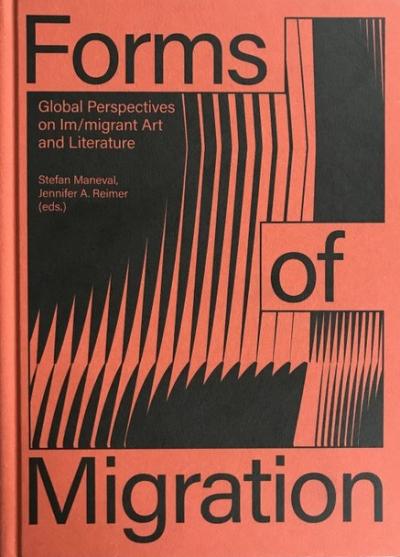
    Stefan Maneval, Jennifer A. Reimer (eds…

    Forms of Migration. Global Perspectives on Im/migrant Art…

  • gerade nicht auf Lager
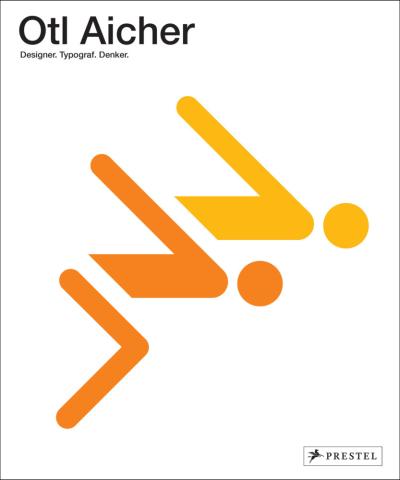
    Winfried Nerdinger, Wilhelm Vossenkuhl…

    Otl Aicher. Designer. Typograf. Denker.

  • gerade nicht auf Lager
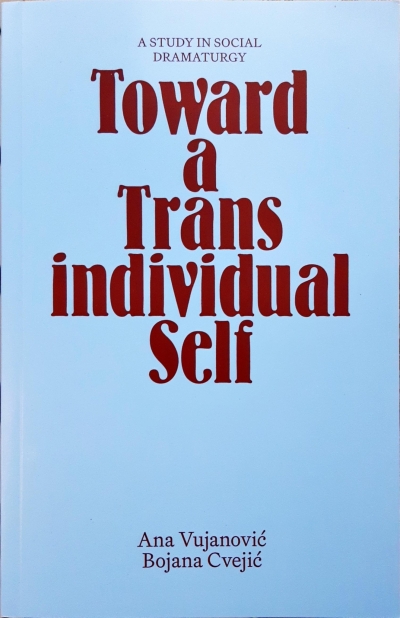
    Ana Vujanovic, Bojana Cvejic

    Toward a Transindividual Self. A study in social dramaturgy

  • gerade nicht auf Lager
    Domenico Quaranta and Janez Janša (eds.)

    Hyperemployment – Post-work, Online Labour and Automation

  • gerade nicht auf Lager
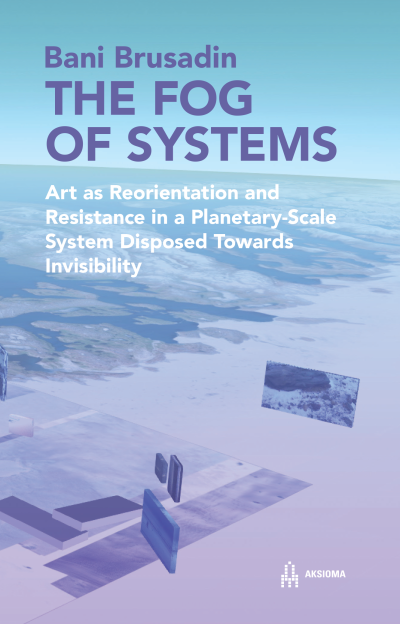
    Bani Brusadin

    The Fog of Systems. Art as Reorientation and Resistance in…

  • gerade nicht auf Lager
    Pau Waelder

    You can be a wealthy art collector in the digital age //…

  • gerade nicht auf Lager
    Andrew Witt

    Formulations. Architecture, Mathematics, Culture (Writing…

  • gerade nicht auf Lager
    Nick Axel, Nikolaus Hirsch, Daniel…

    Accumulation. The Art, Architecture, and Media of Climate…

  • gerade nicht auf Lager
    Andreas Kemper

    Privatstädte. Labore für einen neuen Manchesterkapitalismus

  • Vogliamo tutto (Hg.)

    Revolutionäre Stadtteilarbeit. Zwischenbilanz einer…

  • gerade nicht auf Lager
    Jan Herres

    Das Berliner Zimmer. Geschichte, Typologie,…

  • gerade nicht auf Lager
    Jonathan Crary

    Scorched Earth. Beyond the Digital Age to a Post-Capitalist…

  • gerade nicht auf Lager
    Cary Wolfe

    Art and Posthumanism. Essays, Encounters, Conversations

  • gerade nicht auf Lager
    Joanna Zylinska (Hg)

    The Future of Media

  • gerade nicht auf Lager
    Matthew Gandy

    Natura Urbana. Ecological Constellations in Urban Space

  • gerade nicht auf Lager
    Matthew Wizinsky

    Design after Capitalism. Transforming Design Today for an…

  • Katja Eydel

    Appointed Habitus Set

  • gerade nicht auf Lager
    Yaiza Camps, Moritz Grünke, Pascale…

    Decolonizing Art Book Fairs: Publishing Practices from the…

  • gerade nicht auf Lager
    Carla Zaccagnini

    Carla Zaccagnini. Cuentos de Cuentas

  • gerade nicht auf Lager
    Beate Söntgen, Julia Voss (Hg.)

    Why Art Criticism? A Reader.

  • gerade nicht auf Lager
    Denise Ferreira da Silva

    Unpayable Debt

  • gerade nicht auf Lager
    Carol Vernallis, Holly Rogers, Jonathan…

    Cybermedia. Explorations in Science, Sound, and Vision

  • gerade nicht auf Lager
    Kathy Acker, McKenzie Wark

    Du hast es mir sehr angetan. E-Mails 1995/96

  • gerade nicht auf Lager
    Kirsty Bell

    The Undercurrents. A Story of Berlin

  • gerade nicht auf Lager
    Arnold Bartetzky Nicolas, Karpf, Greta…

    Architektur und Städtebau in der DDR. Stimmen und…

  • Barbara Winckler, Enass Khansa,…

    Thinking Through Ruins. Genealogies, Functions, and…

  • Reclaim Your City

    Bitte Lebn. Urbane Kunst & Subkultur in Berlin 2003 -…

  • gerade nicht auf Lager
    Claudia Mareis, Moritz Greiner-Petter,…

    Critical by Design? Genealogies, Practices, Positions

  • Arch+ Zeitschrift für Architektur und…

    Arch+ 247. Cohabitation

  • dérive

    dérive N° 87, Sampler (Apr-Jun 2022)

  • gerade nicht auf Lager
    Anna-Sophie Springer & Etienne…

    These Birds Of Temptation (Intercalations 6)

  • gerade nicht auf Lager
    Ioanna Gerakidi & Danae Io

    In the Current of the Situation

  • Ricardo Devesa

    Outdoor Domesticity. On the Relationships between Trees,…

  • Nils Wortmann

    Alles so schön still hier 100 Ambient-Alben, die man gehört…

  • Herbert Haffner

    His Master's Voice. Die Geschichte der Schallplatte.…

  • Markus Müller (Hg)

    Free Music Production. FMP - The Living Music

  • gerade nicht auf Lager
    Alexander Opper, Katharina Fink, Nadine…

    Das Bauhaus verfehlen/ Missing the Bauhaus

  • gerade nicht auf Lager
    Katharina Fink, Marie-Anne Kohl, Nadine…

    Ghosts, spectres, revenants. Hauntology as a means to think…

  • gerade nicht auf Lager
    Christine Schranz (ed.)

    Shifts in Mapping. Maps as a tool of knowledge

  • Finn Dammann, Boris Michel (Hg.)

    Handbuch Kritisches Kartieren

  • Krypto-Kunst Kolja Reichert

    Krypto-Kunst. NFTs und digitales Eigentum (Digitale…

  • Phil Bernstein

    Machine Learning. Architecture in the Age of Artifical…

  • gerade nicht auf Lager
    Alexander Stumm, Victor Lortie (Hg)

    Überbau. Produktionsverhältnisse der Architektur im…

  • Giovanna Borasi (Hg.)

    A Section of Now. Social Norms and Rituals as Sites for…

  • gerade nicht auf Lager
    Boris Groys

    Philosophy of Care

  • gerade nicht auf Lager
    Terry Smith

    Curating the Complex and the Open Strike

  • gerade nicht auf Lager
    Pedro Neves Marques (ed.)

    YWY, Searching for a Character between Future Worlds Gender…

  • gerade nicht auf Lager
    Bassam El Baroni (ed.)

    Between the Material and the Possible. Infrastructural Re-…

  • gerade nicht auf Lager
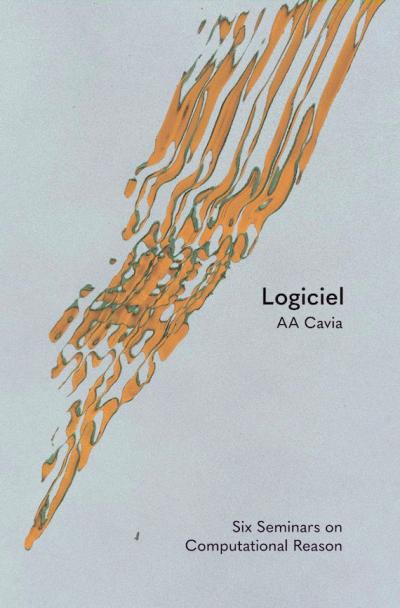
    AA Cavia

    Logiciel. Six Seminars on Computational Reason

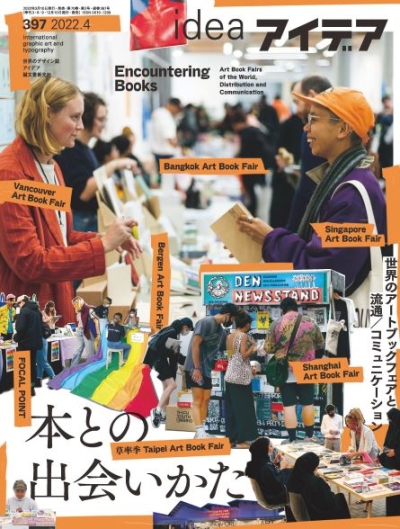
  • IDEA Magazine

    IDEA 397. Encountering Books. Art Book Fairs of the World,…

  • gerade nicht auf Lager
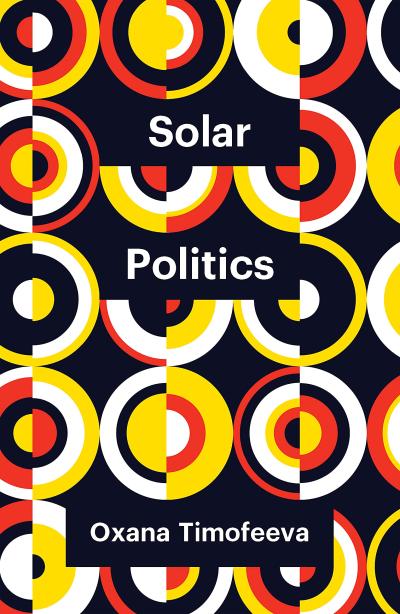
    Oxana Timofeeva

    Solar Politics (Theory Redux)

  • gerade nicht auf Lager
    Dhanveer Singh Brar

    Teklife, Ghettoville, Eski. The Sonic Ecologies of Black…

  • gerade nicht auf Lager
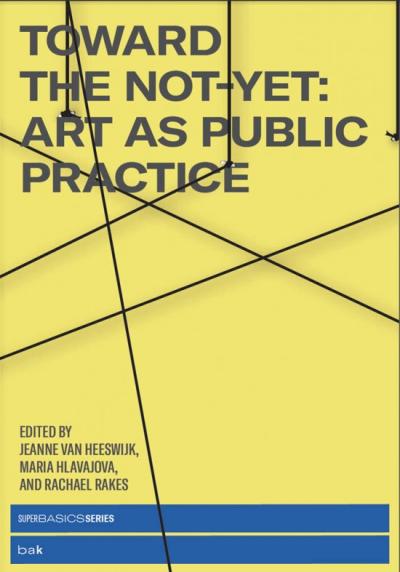
    Jeanne van Heeswijk, Maria Hlavajova,…

    Toward the Not-Yet. Art as Public Practice

  • gerade nicht auf Lager
    Karin Harrasser

    Surazo

  • gerade nicht auf Lager
    Oli Freke

    Synthesizer Evolution: From Analogue to Digital and Back

  • gerade nicht auf Lager
    Felix Pfeiffer-Kloss (Hg)

    Berlin U-Bahn Architecture & Design Map. Berliner U-…

  • gerade nicht auf Lager
    Alvin Lucier

    Eight Lectures on Experimental Music

  • Derek Lamberton (Hg.)

    Brutalismus Stadtplan Berlin. Brutalist Berlin Map

  • gerade nicht auf Lager
    Laurie Penny

    Sexuelle Revolution. Rechter Backlash und feministische…

  • bell hooks

    Männer, Männlichkeit und Liebe

  • Angela Million, Christian Haid, Ignacio…

    Spatial Transformations. Kaleidoscopic Perspectives on the…

  • gerade nicht auf Lager
    Simone Forti

    Simone Forti. Handbook in Motion. An Account of an Ongoing…

  • gerade nicht auf Lager
    Paul Dobraszcyk

    Architecture and Anarchism. Building without Authority

  • Elke Genzel, Pamela Voigt

    BUCH ZWEI. Leben in Kunststoffbauten

  • Martin Eberle

    Hi Schatz!

  • Ernesto Laclau

    Die populistische Vernunft

  • gerade nicht auf Lager
    Desiree Förster

    Aesthetic Experience of Metabolic Processes

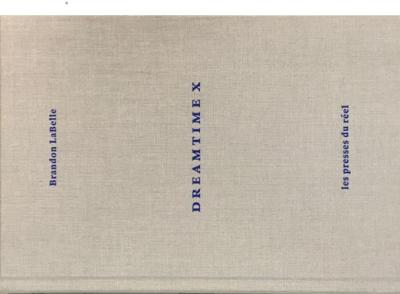
  • Brandon LaBelle

    Dreamtime X

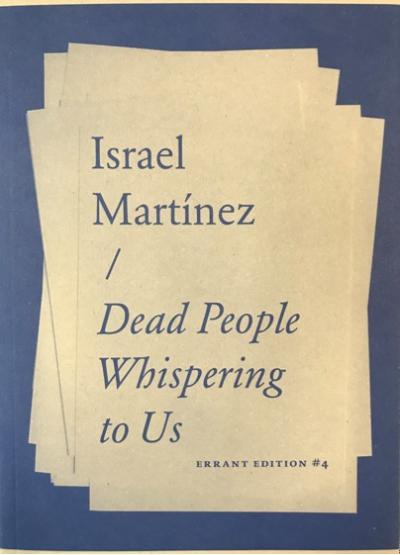
  • Israel Martínez

    Dead People Whispering to Us

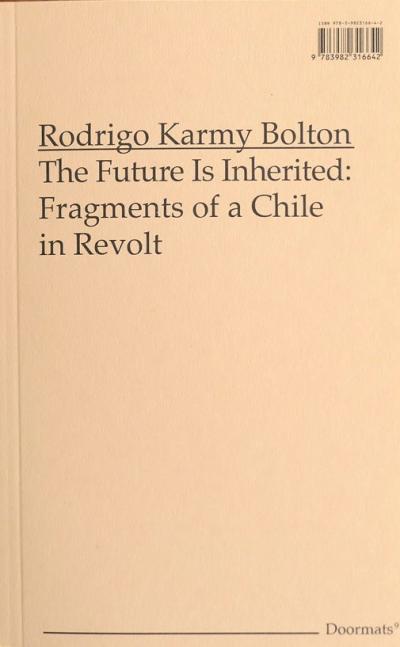
  • Rodrigo Karmy Bolton

    The Future Is Inherited: Fragments of a Chile in Revolt

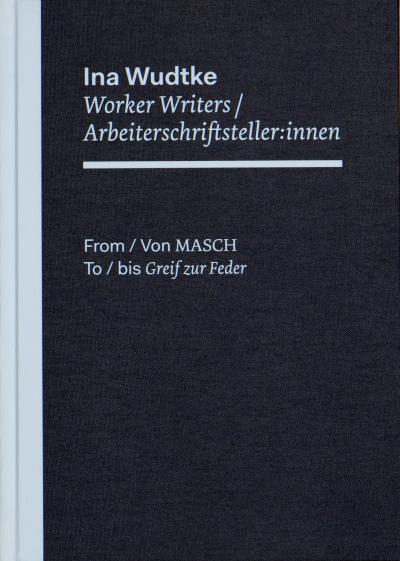
  • Ina Wudtke

    Worker Writers / Arbeiterschriftsteller:innen

  • gerade nicht auf Lager
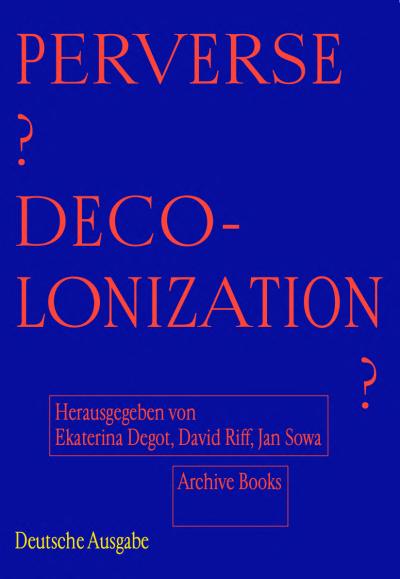
    Ekaterina Degot, David Riff, Jan Sowa (…

    Perverse decolonisation? (Deutsche Ausg.)

  • gerade nicht auf Lager
    The Otolith Group, Megs Morley (Hg)

    Xenogenesis. The Otolith Group (Anjalika Sagar, Kodwo Eshun)

  • gerade nicht auf Lager
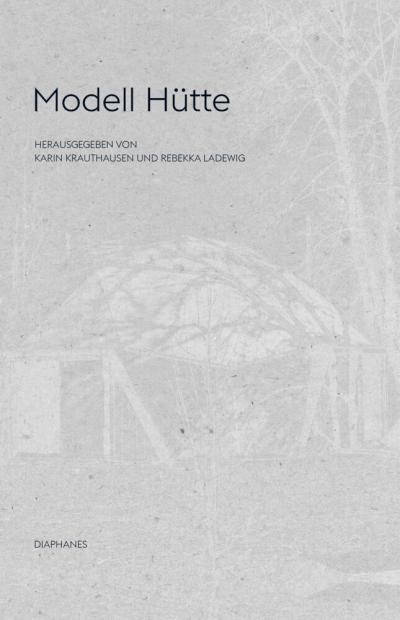
    Karin Krauthausen, Rebekka Ladewig (Hg.)

    Modell Hütte. Von emergenten Strukturen, schützender Haut…

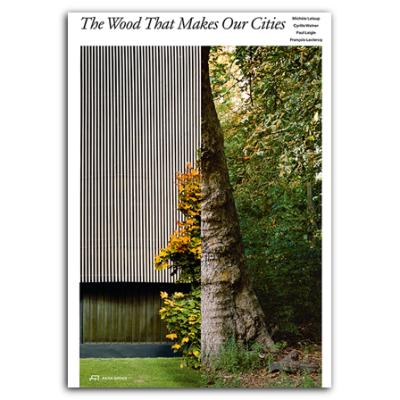
  • Edited by Michèle Leloup, Cyrille…

    The Wood That Makes Our City

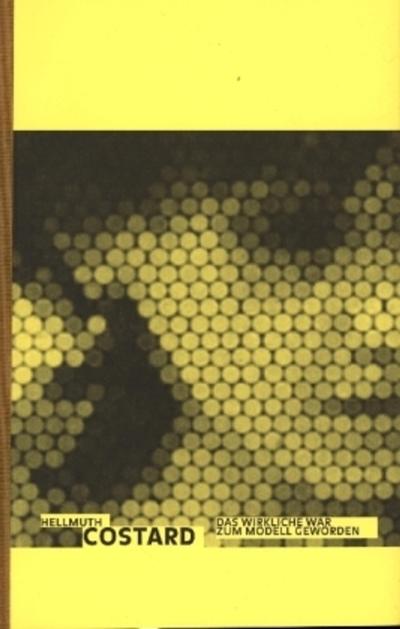
  • Lars Henrik Gass (Hg.)

    Hellmuth Costard. Das Wirkliche war zum Modell geworden

  • Peter Swinnen, Nikolaus Hirsch

    A.J. Lode Janssens 1,47 mbar

  • Juliane Rebentisch

    Der Streit um Pluralität. Auseinandersetzungen mit Hannah…

  • Helke Sander

    I like chaos, but I don’t know, whether chaos likes me

  • gerade nicht auf Lager
    Viction Workshop (Hg.)

    More Is More: Designing Bigger, Bolder, Brighter

  • Cristina Baldacci, Clio Nicastro,…

    Over and Over and Over Again Reenactment Strategies in…

  • Pauline Agustoni, Satomi Minoshima

    Craft Portrait: Dorozome

  • gerade nicht auf Lager
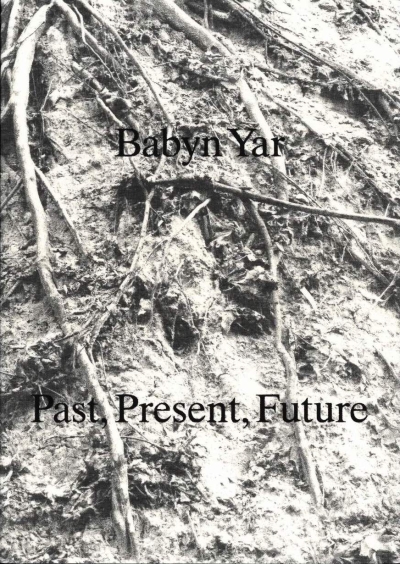
    Nick Axel, Nicholas Korody (eds)

    Babyn Yar. Past, Present, Future

  • gerade nicht auf Lager
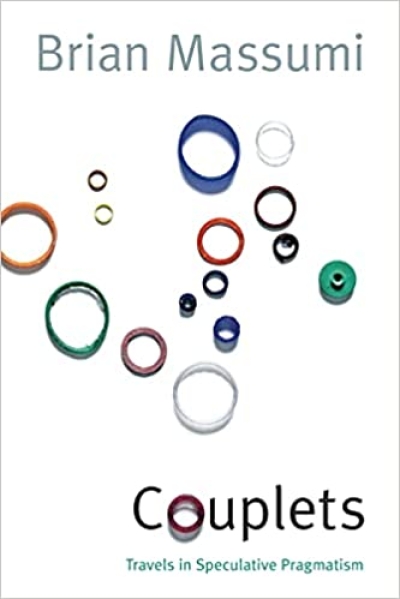
    Brian Massumi

    Couplets. Travels in Speculative Pragmatism

  • gerade nicht auf Lager
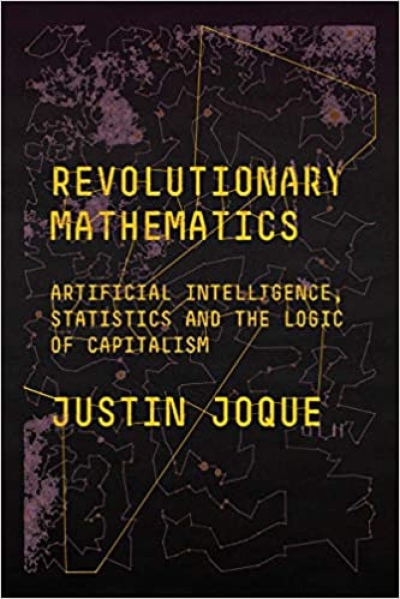
    Justin Joquue

    Revolutionary Mathematics. Artificial Intelligence,…

  • gerade nicht auf Lager
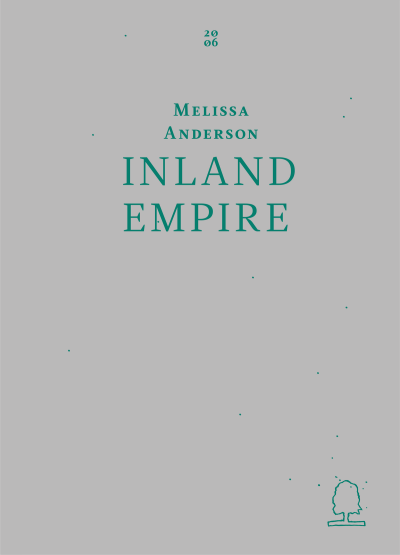
    Melissa Anderson

    Inland Empire

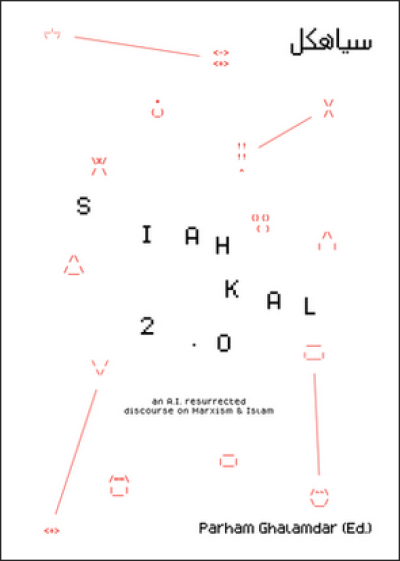
SIAHKAL 2.0: An A.I. resurrected discourse on Marxism & Islam


Siahkal names a place in the forests of Gilan and a threshold in revolutionary time. In 1971 a guerrilla action near Siahkal shook the order of the Shah. The action failed militarily yet seeded a myth for the People’s Fedai Guerrillas. Bizhan Jazani, a founding thinker, wrote and painted in prison and was executed in 1975. His work teaches that strategy rather than sentiment endures. // This book treats Siahkal as a Deep Object, a persistent attractor that gathers memory, images, and tactics. An AI model trained on Jazani’s writings and paintings translates his essay on Islamic Marxism and proposes annotations. The machine functions as a probe that widens attention while remaining accountable to the source. Parham Ghalamdar trained the AI, wrote the introduction, and composed ASCII diagrams and diagrammatic readings from Jazani’s artworks. Parsa Esmaeilzadeh contributes an essay that reads Jazani through Karatani and left accelerationism. // It is a call to reimagine and export revolution as a Deep Object that asks for Deep Time to unfold. This clandestine edition invites the reader to study, test, and build strategy that can outlast the news cycle and meet the future head on.

This is a limited edition book. The author trained an LLM on the texts of a deceased theorist, and then proceeded to interact with the LLM and produce simulations of what the theorist may have said in regards to various pertinent topics. The book is primarily a free online resource, but a few copies are being printed to commemorate the work. It has a foreword and afterword by the Editors.

At the core of this project is a translation of “Marxist Islam or Islamic Marxism,” a groundbreaking text written by Bizhan Jazani during his imprisonment in the 1970s under the Shah’s oppressive regime. Translated by Parham Ghalamdar, this work is accompanied by an introduction contextualizing Jazani’s radical vision. Ghalamdar also contributes a series of ASCII-style illustrations and diagrams—AI-assisted reinterpretations of Jazani’s original paintings and photographs—that bridge the past and present, offering a new perspective on his revolutionary artistry.


About the author
Parham Ghalamdar is a multidisciplinary artist currently based in the UK. Ghalamdar’s work traces forgotten mythologies, buried philosophies, and visual ruins, reconfiguring them into speculative worlds where memory, fiction, and futurism collapse into one another. Drawing on cybernetic theory and generative AI, he explores how systems of feedback, simulation, and machine vision mediate our understanding of history and possibility. Through painting, film, and writing, he builds narratives that feel both ancient and yet-to-come, haunted by lost histories and animated by possible futures.


Siahkal
names a place in the forests of Gilan and a threshold in revolutionary
time. In 1971 a guerrilla action near Siahkal shook the order of the
Shah. The action failed militarily yet seeded a myth for the People’s
Fedai Guerrillas. Bizhan Jazani, a founding thinker, wrote and painted
in prison and was executed in 1975. His work teaches that strategy
rather than sentiment endures. // This book treats Siahkal as a Deep
Object, a persistent attractor that gathers memory, images, and tactics.
An AI model trained on Jazani’s writings and paintings translates his
essay on Islamic Marxism and proposes annotations. The machine functions
as a probe that widens attention while remaining accountable to the
source. Parham Ghalamdar trained the AI, wrote the introduction, and
composed ASCII diagrams and diagrammatic readings from Jazani’s
artworks. Parsa Esmaeilzadeh contributes an essay that reads Jazani
through Karatani and left accelerationism. // It is a call to reimagine
and export revolution as a Deep Object that asks for Deep Time to
unfold. This clandestine edition invites the reader to study, test, and
build strategy that can outlast the news cycle and meet the future head
on.


This is a limited edition book. The author trained an LLM on the texts
of a deceased theorist, and then proceeded to interact with the LLM and
produce simulations of what the theorist may have said in regards to
various pertinent topics. The book is primarily a free online resource,
but a few copies are being printed to commemorate the work. It has a
foreword and afterword by the Editors.


At the core of this project is a translation of “Marxist Islam or
Islamic Marxism,” a groundbreaking text written by Bizhan Jazani during
his imprisonment in the 1970s under the Shah’s oppressive regime.
Translated by Parham Ghalamdar, this work is accompanied by an
introduction contextualizing Jazani’s radical vision. Ghalamdar also
contributes a series of ASCII-style illustrations and
diagrams—AI-assisted reinterpretations of Jazani’s original paintings
and photographs—that bridge the past and present, offering a new
perspective on his revolutionary artistry.


About the author

Parham Ghalamdar is a multidisciplinary artist currently based in the
UK. Ghalamdar’s work traces forgotten mythologies, buried philosophies,
and visual ruins, reconfiguring them into speculative worlds where
memory, fiction, and futurism collapse into one another. Drawing on
cybernetic theory and generative AI, he explores how systems of
feedback, simulation, and machine vision mediate our understanding of
history and possibility. Through painting, film, and writing, he builds
narratives that feel both ancient and yet-to-come, haunted by lost
histories and animated by possible futures.


Siahkal
names a place in the forests of Gilan and a threshold in revolutionary
time. In 1971 a guerrilla action near Siahkal shook the order of the
Shah. The action failed militarily yet seeded a myth for the People’s
Fedai Guerrillas. Bizhan Jazani, a founding thinker, wrote and painted
in prison and was executed in 1975. His work teaches that strategy
rather than sentiment endures. // This book treats Siahkal as a Deep
Object, a persistent attractor that gathers memory, images, and tactics.
An AI model trained on Jazani’s writings and paintings translates his
essay on Islamic Marxism and proposes annotations. The machine functions
as a probe that widens attention while remaining accountable to the
source. Parham Ghalamdar trained the AI, wrote the introduction, and
composed ASCII diagrams and diagrammatic readings from Jazani’s
artworks. Parsa Esmaeilzadeh contributes an essay that reads Jazani
through Karatani and left accelerationism. // It is a call to reimagine
and export revolution as a Deep Object that asks for Deep Time to
unfold. This clandestine edition invites the reader to study, test, and
build strategy that can outlast the news cycle and meet the future head
on.


This is a limited edition book. The author trained an LLM on the texts
of a deceased theorist, and then proceeded to interact with the LLM and
produce simulations of what the theorist may have said in regards to
various pertinent topics. The book is primarily a free online resource,
but a few copies are being printed to commemorate the work. It has a
foreword and afterword by the Editors.


At the core of this project is a translation of “Marxist Islam or
Islamic Marxism,” a groundbreaking text written by Bizhan Jazani during
his imprisonment in the 1970s under the Shah’s oppressive regime.
Translated by Parham Ghalamdar, this work is accompanied by an
introduction contextualizing Jazani’s radical vision. Ghalamdar also
contributes a series of ASCII-style illustrations and
diagrams—AI-assisted reinterpretations of Jazani’s original paintings
and photographs—that bridge the past and present, offering a new
perspective on his revolutionary artistry.


About the author

Parham Ghalamdar is a multidisciplinary artist currently based in the
UK. Ghalamdar’s work traces forgotten mythologies, buried philosophies,
and visual ruins, reconfiguring them into speculative worlds where
memory, fiction, and futurism collapse into one another. Drawing on
cybernetic theory and generative AI, he explores how systems of
feedback, simulation, and machine vision mediate our understanding of
history and possibility. Through painting, film, and writing, he builds
narratives that feel both ancient and yet-to-come, haunted by lost
histories and animated by possible futures.


Siahkal names a place in the forests of Gilan and a threshold in revolutionary time. In 1971 a guerrilla action near Siahkal shook the order of the Shah. The action failed militarily yet seeded a myth for the People’s Fedai Guerrillas. Bizhan Jazani, a founding thinker, wrote and painted in prison and was executed in 1975. His work teaches that strategy rather than sentiment endures. // This book treats Siahkal as a Deep Object, a persistent attractor that gathers memory, images, and tactics. An AI model trained on Jazani’s writings and paintings translates his essay on Islamic Marxism and proposes annotations. The machine functions as a probe that widens attention while remaining accountable to the source. Parham Ghalamdar trained the AI, wrote the introduction, and composed ASCII diagrams and diagrammatic readings from Jazani’s artworks. Parsa Esmaeilzadeh contributes an essay that reads Jazani through Karatani and left accelerationism. // It is a call to reimagine and export revolution as a Deep Object that asks for Deep Time to unfold. This clandestine edition invites the reader to study, test, and build strategy that can outlast the news cycle and meet the future head on.

This is a limited edition book. The author trained an LLM on the texts of a deceased theorist, and then proceeded to interact with the LLM and produce simulations of what the theorist may have said in regards to various pertinent topics. The book is primarily a free online resource, but a few copies are being printed to commemorate the work. It has a foreword and afterword by the Editors. 

At the core of this project is a translation of “Marxist Islam or Islamic Marxism,” a groundbreaking text written by Bizhan Jazani during his imprisonment in the 1970s under the Shah’s oppressive regime. Translated by Parham Ghalamdar, this work is accompanied by an introduction contextualizing Jazani’s radical vision. Ghalamdar also contributes a series of ASCII-style illustrations and diagrams—AI-assisted reinterpretations of Jazani’s original paintings and photographs—that bridge the past and present, offering a new perspective on his revolutionary artistry.


“Bizhan Jazani”, Parham Ghalamdar
SIAHKAL 2.0: An A.I. resurrected discourse on Marxism & Islam
Becoming Press, 2025, 978-9925-8207-7-1
15,00 €