











Direkt zum Inhalt

Warenkorb

  • gerade nicht auf Lager
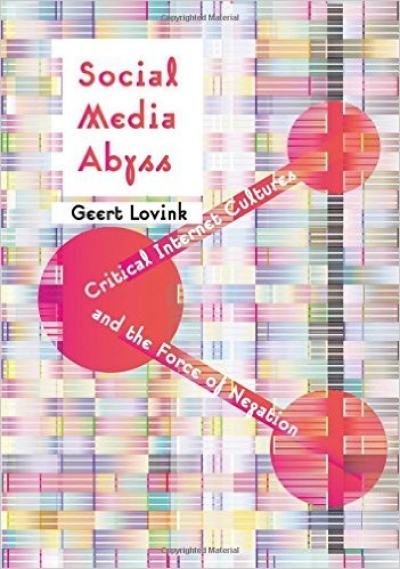
    Geert Lovink

    Social Media Abyss. Critical Internet Cultures and the…

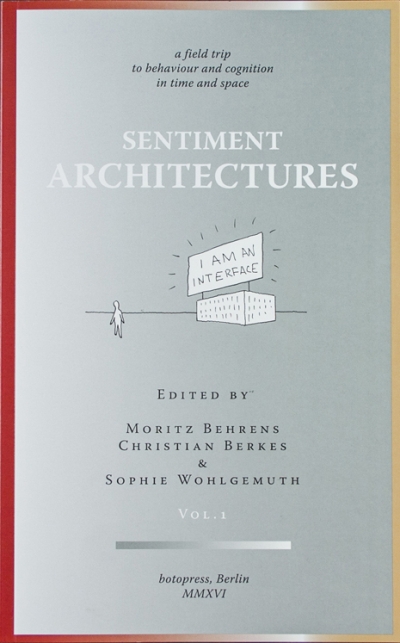
  • Moritz Behrens, Christian Berkes,…

    Sentiment Architectures. A Field Trip to Behaviour and…

  • gerade nicht auf Lager
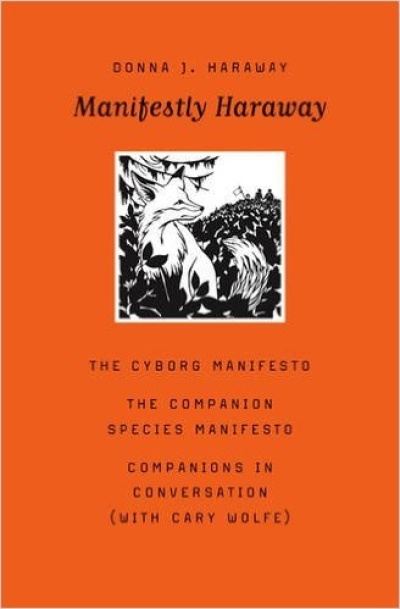
    Donna J. Haraway

    Manifestly Haraway

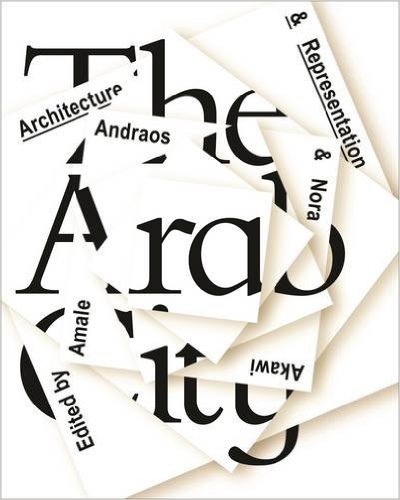
  • A. Andraos, N. Akawi (eds)

    The Arab City: Architecture and Representation

  • gerade nicht auf Lager
    HKW (Ed.)

    Nervous Systems

  • gerade nicht auf Lager
    Felicity D. Scott

    Outlaw Territories. Environments of Insecurity/…

  • gerade nicht auf Lager
    Owen Hatherley

    Landscapes of Communism. A History Through Buildings

  • Rashid Ali, Andrew Cross

    Mogadishu. Lost Moderns

  • gerade nicht auf Lager
    Schmal, Elser, Scheuermann (eds.)

    Making Heimat. Germany, Arrival Country

  • Helge Mooshammer, Peter Mörtenböck

    Visual Cultures as Opportunity

  • gerade nicht auf Lager
    Simone Neuenschwander, Thomas Thiel (…

    Transparenzen/Transparencies

  • gerade nicht auf Lager
    A. Angelidakis, V. Pizzigoni, V. Scelsi…

    Super Superstudio

  • gerade nicht auf Lager
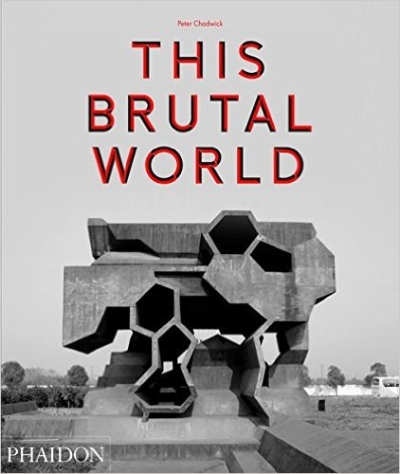
    Peter Chadwick

    This Brutal World

  • gerade nicht auf Lager
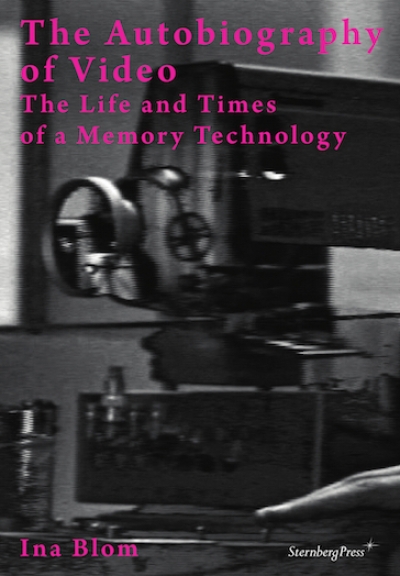
    Ina Blom

    The Autobiography of Video. The Life and Times of a Memory…

  • gerade nicht auf Lager
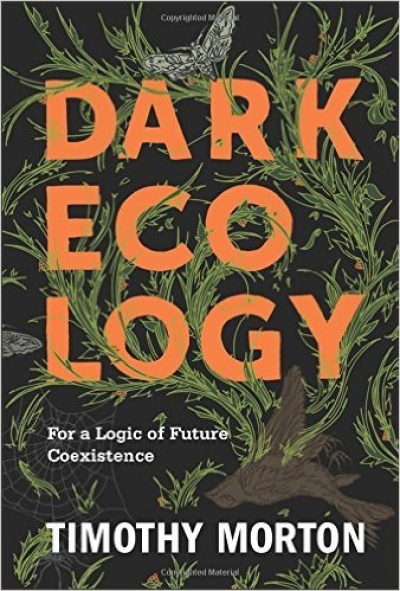
    Timothy Morton

    Dark Ecology. For a Logic of Future Coexistence

  • gerade nicht auf Lager
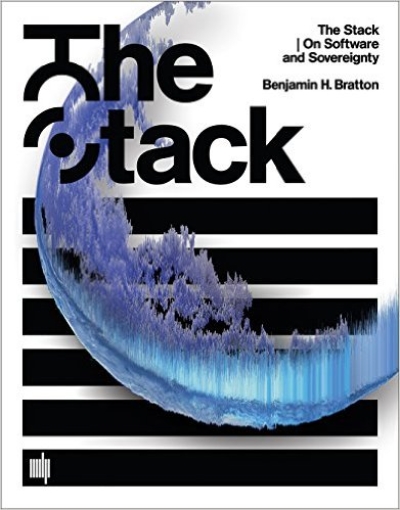
    Benjamin H. Bratton

    The Stack. On Software and Sovereignty

  • gerade nicht auf Lager
    Nadine Barth (Hg.)

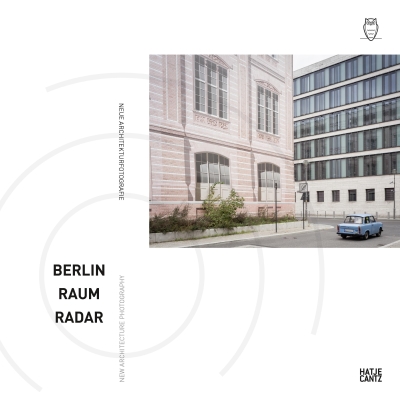
    Berlin Raum Radar. Neue Architekturfotografie

  • Biljana Ciric, Nikita Yingqian Cai (Ed)

    Active Withdrawals. Life and Death of Institutional Critique

  • gerade nicht auf Lager
    Burkhardt Meltzer

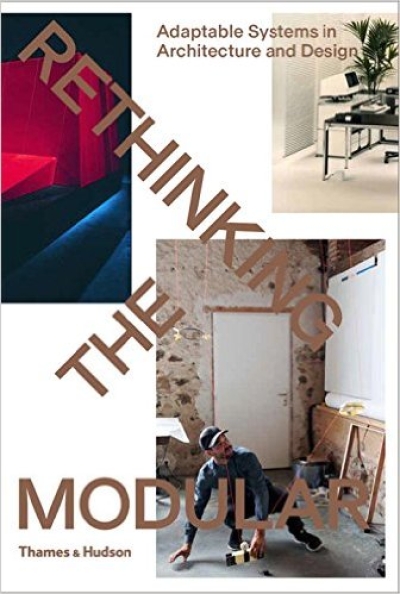
    Rethinking the Modular. Adaptable Systems in Architecture…

  • Bibbl. Herzog von Bayern

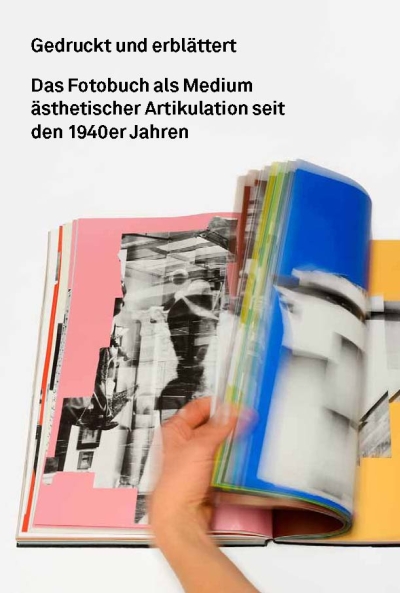
    Gedruckt und erblättert. Das Fotobuch als Medium…

  • Estelle Blaschke

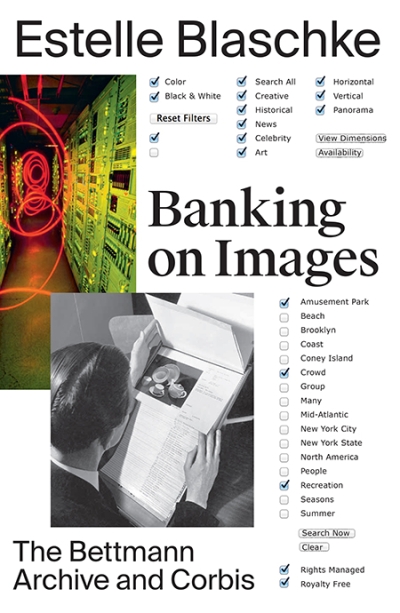
    Banking on Images. From the Bettmann Archive to Corbis

  • gerade nicht auf Lager
    Walter Benjamin.

    Sonnets

  • gerade nicht auf Lager
    David Toop

    Into the Maelstrom: Music, Improvisation and the Dream of…

  • gerade nicht auf Lager
    Nicolas Grospierre

    Modern Forms. A Subjective Atlas of 20th-Century…

  • gerade nicht auf Lager
    Slavoj Zizek

    Against the Double Blackmail: Refugees, Terror and Other…

  • gerade nicht auf Lager
    Ian Brennan

    How Music Dies (or Lives): Field Recording and the Battle…

  • Gustav Roßler

    Der Anteil der Dinge an der Gesellschaft. Sozialität -…

  • gerade nicht auf Lager
    Walter Grasskamp

    Das Kunstmuseum. Eine erfolgreiche Fehlkonstruktion

  • Siegfried Ebeling

    Der Raum als Membran

  • Patrick Joseph

    Poet Fool

  • gerade nicht auf Lager
    Charlotte Klonk (Ed.)

    New Laboratories. Historical and Critical Perspectives on…

  • gerade nicht auf Lager
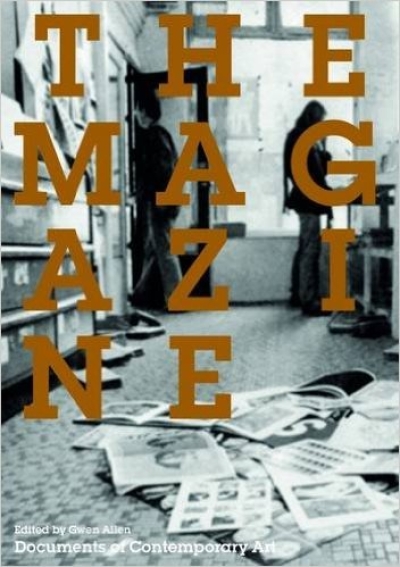
    Gwen Allen

    The Magazine (Documents of Contemporary Art)

  • gerade nicht auf Lager
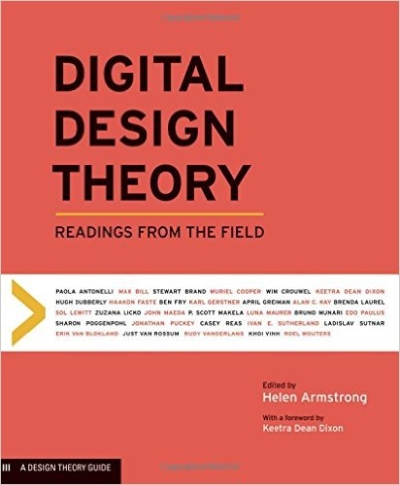
    Helen Armstrong

    Digital Design Theory

  • gerade nicht auf Lager
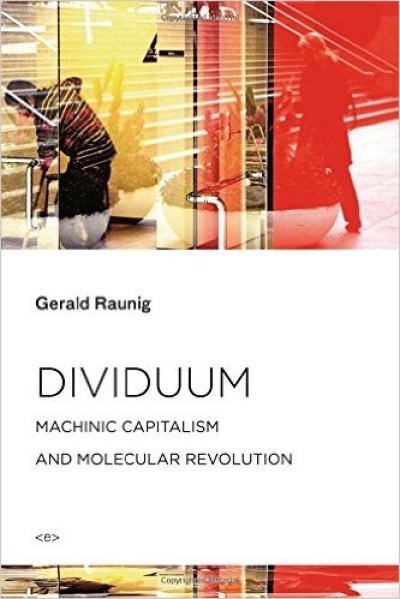
    Gerald Raunig

    Dividuum. Machinic Capitalism and Molecular Revolution

  • gerade nicht auf Lager
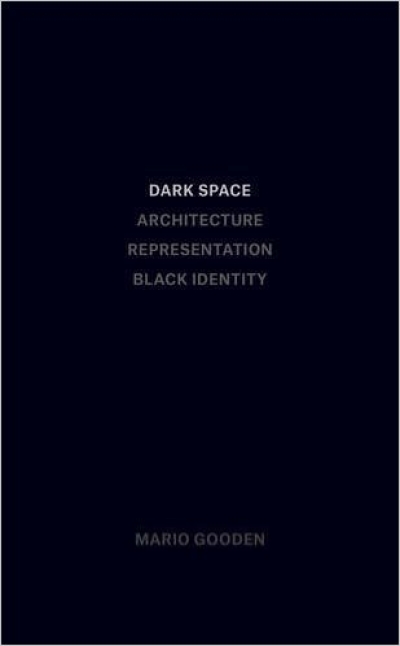
    Mario Gooden

    Dark Space. Architecture, Representation, Black Identity

  • gerade nicht auf Lager
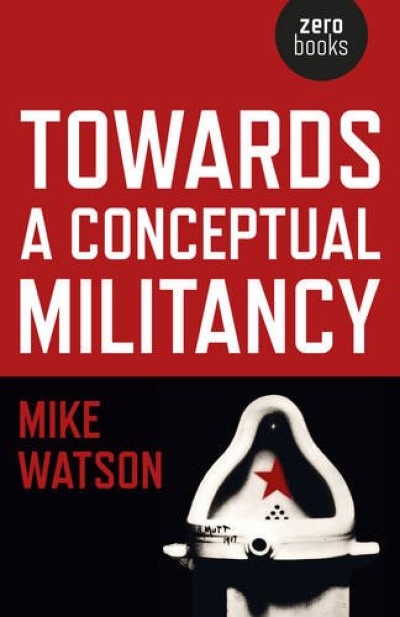
    Mike Watson

    Towards a Conceptual Militancy

  • gerade nicht auf Lager
    Guttmann, Kaiser, Mazanek, diachron (…

    Jan Turnovsky: The Weltanschauung as an Ersatz Gestalt.…

  • gerade nicht auf Lager
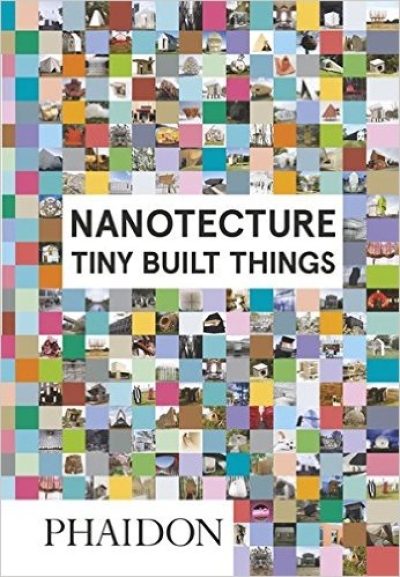
    Rebecca Roke

    Nanotecture: Tiny Built Things

  • M. del Junco, M. Toledo (Eds.)

    Max Bill

  • gerade nicht auf Lager
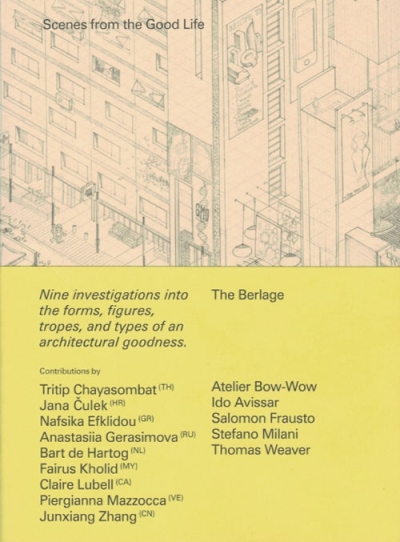
    Salomon Frausto

    Scenes from the Good Life. Nine investigations into the…

  • gerade nicht auf Lager
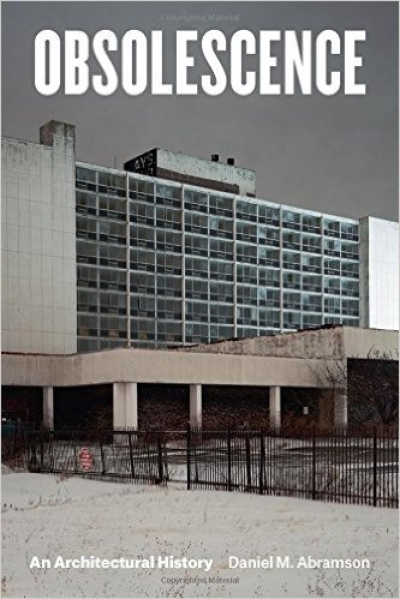
    Daniel M. Abramson

    Obsolescence. An Architectural History

  • gerade nicht auf Lager
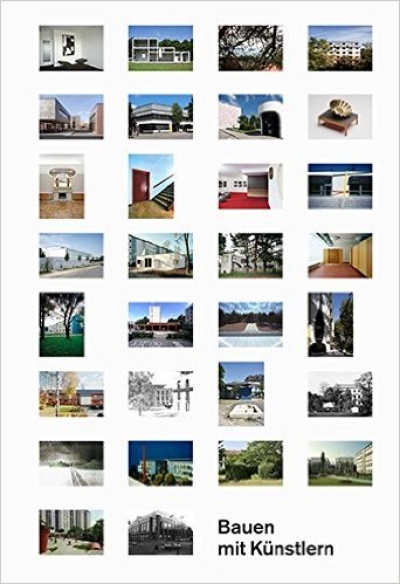
    Robert Stalla (Hg.)

    Bauen mit Künstlern: Architekt Peter Ottmann

  • gerade nicht auf Lager
    Georg Diez/Christopher Roth

    80*81: What Happened?

  • Sara De Bondt, Fraser Muggeridge

    The Form of the Book Book

  • gerade nicht auf Lager
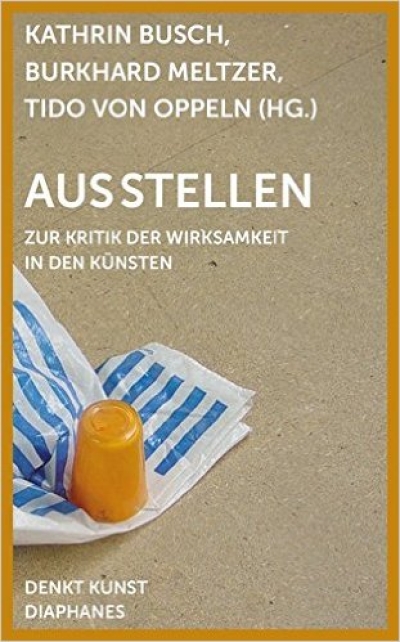
    K. Busch, B. Meltzer, T. von Oppeln (Hg)

    Ausstellen: Zur Kritik der Wirksamkeit in den Künsten

  • Fiona McGovern

    Die Kunst zu zeigen: Künstlerische Ausstellungsdisplays bei…

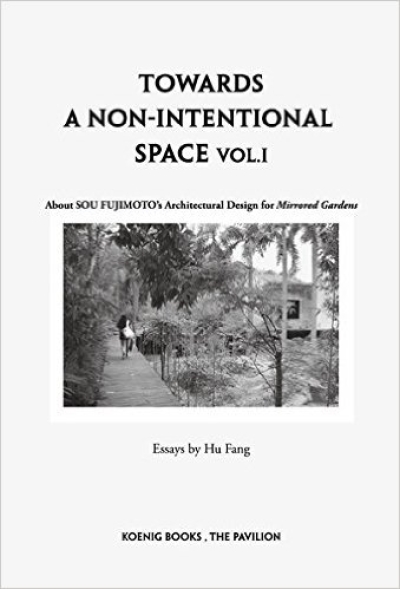
  • Hu Fang

    Sou Fujimoto. Towards a Non-Intentional Space. About Sou…

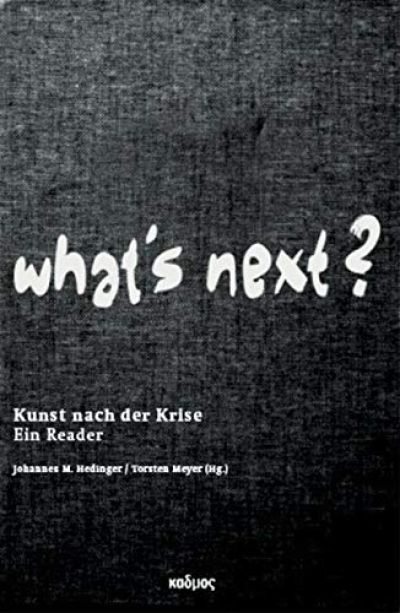
  • Johannes M. Hedinger, Torsten Meyer (Hg)

    What's Next? Kunst nach der Krise. Ein Reader

  • gerade nicht auf Lager
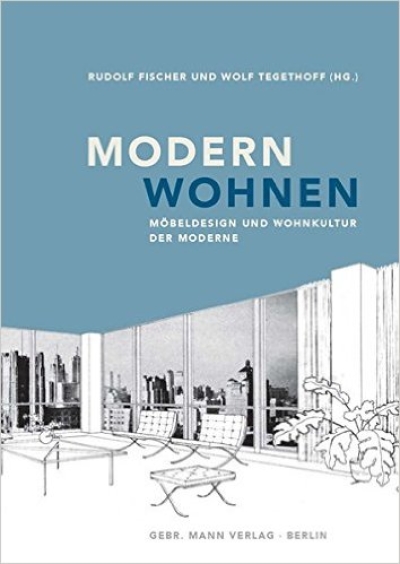
    Rudolf Fischer, Wolf Tegethoff (Hg.)

    Modern wohnen. Möbeldesign und Wohnkultur der Moderne

  • W. Cobbing, R. Cooper (Eds.)

    Boooook: The Life and Work of Bob Cobbing

  • gerade nicht auf Lager
    Robert Klanten, Sofia Borges (Eds.)

    The Tale Of Tomorrow. Utopian Architecture in the Modernist…

  • Angela Dimitrakaki

    Gender, Artwork and the Global Imperative

  • gerade nicht auf Lager
    Giorgio Agamben

    The Use of Bodies

  • gerade nicht auf Lager
    Andreas Seltzer

    Der Sendermann / The Transmitter Man

  • Lada Umstätter (Hg)

    Le Corbusier und die Macht der Fotografie

  • Tilman Baumgärtel (Hg)

    Pirate Essays. A Reader on International Media Piracy

  • Paul B. Preciado

    TESTO JUNKIE: Sex, Drogen und Biopolitik in der Ära der…

  • gerade nicht auf Lager
    Guendalina Salimei

    Luigi Moretti. Terme Bonifacio VIII Fiuggi 1963 - 1969

  • Henri Lefebvre

    Das Recht auf Stadt

  • Gijs Wallis de Vries

    Archescape. On the tracks of Piranesi

  • gerade nicht auf Lager
    Christopher Beanland

    Concrete Concept. Brutalist Buildings Around the World

  • Stephen Willats

    Vision and Reality

  • Anja Schwanhäußer (ed)

    Sensing the City. A Companion to Urban Anthropology

  • gerade nicht auf Lager
    Jeannette Kuo, Frank Barkow (Eds.)

    Space of Production. Projects and Essays on Rationality,…

  • Amelia Jones, Erin Silber (Hg)

    Otherwise. Imagining Queer Feminist Art Histories

  • gerade nicht auf Lager
    David Keenan

    England's Hidden Reverse. Coil, Current 93, Nurse with…

  • gerade nicht auf Lager
    Nils Aschenbeck

    Reformarchitektur. Die Konstituierung der Ästhetik der…

  • gerade nicht auf Lager
    Christian Schittich (Hg.)

    Best of Detail: Beton / Concrete

  • gerade nicht auf Lager
    August Sarnitz, Inge Scholz-Strasser (…

    Private Utopia: Cultural Setting of the Interior in the…

  • gerade nicht auf Lager
    René Zechlin (Hg.)

    Wie leben? Zukunftsbilder von Malewitch bis Fujimoto

  • gerade nicht auf Lager
    Loretta Lees, Hyun Bang Shin, Ernesto…

    Planetary Gentrification

  • gerade nicht auf Lager
    Srećko Horvat

    The Radicality of Love

  • gerade nicht auf Lager
    Busch, Klanten, Hellige (Hg.)

    The Age of Collage Vol. 2: Contemporary Collage in Modern…

  • gerade nicht auf Lager
    André Tavares

    The Anatomy of the Architectural Book

  • gerade nicht auf Lager
    Susanne Leeb

    Die Kunst der Anderen. "Weltkunst" und die…

  • gerade nicht auf Lager
    Heike Jenss (Ed.)

    Fashion Studies. Research Methods, Sites and Practices

  • Maud Meyzaud (Hg.)

    Arme Gemeinschaft. Die Moderne Rousseaus

  • gerade nicht auf Lager
    Félix Guattari

    Schriften zur Kunst

  • gerade nicht auf Lager
    Jesko Fezer & Studio…

    Öffentliche Gestaltungsberatung. Public Design Support 2011…

  • Gerald Raunig, Ulf Wuggenig

    Kritik der Kreativität

  • gerade nicht auf Lager
    Walter Scheiffele

    Das leichte Haus. Utopie und Realität der Membranarchitektur

  • gerade nicht auf Lager
    Nora Amin

    Migrating the Feminine

  • gerade nicht auf Lager
    Stuart Walton

    In The Realm of the Senses. A Materialist Theory of Seeing…

  • gerade nicht auf Lager
    Felicity D. Scott (Autor), Nikolaus…

    Disorientation: Bernard Rudofsky in the Empire of Signs.…

  • Stefano Harney, Fred Moten

    Die Undercommons. Flüchtige Planung und schwarzes Studium

  • gerade nicht auf Lager
    Cord Riechelmann, Brigitte Oetker (Eds.)

    Toward an Aesthetics of Living Beings / Zu einer Ästhetik…

  • gerade nicht auf Lager
    Badura, Dubach, Haarmann, Mersch et al.

    Künstlerische Forschung. Ein Handbuch

  • gerade nicht auf Lager
    Marc Kushner

    Die Zukunft der Architektur in 100 Bauwerken

  • gerade nicht auf Lager
    Siegfried Zielinski (Hg.)

    Flusseriana: An Intellectual Toolbox

  • gerade nicht auf Lager
    Owen Hatherley

    The Ministry of Nostalgia. Consuming Austerity

  • gerade nicht auf Lager
    A. Baur, M. Weber (Hg.)

    Better than de Kooning

  • Jörg Heiser

    Doppelleben. Kunst und Popmusik

  • gerade nicht auf Lager
    John Roberts

    Die Notwendigkeit von Irrtümern

  • gerade nicht auf Lager
    C. Thun-Hohenstein (Ed.)

    Josef Frank. Against Design

  • gerade nicht auf Lager
    Friedrich Kittler (Autor), Tania Hron,…

    Baggersee. Frühe Schriften aus dem Nachlass

  • gerade nicht auf Lager
    Leigh Phillips

    Austerity Ecology & the Collapse-porn Addicts. A…

  • IDEA Magazine

    IDEA 373. Post Independent Magazine

  • gerade nicht auf Lager
    Armen Avanessian, Suhail Malik

    Genealogies of Speculation. Materialism and Subjectivity…

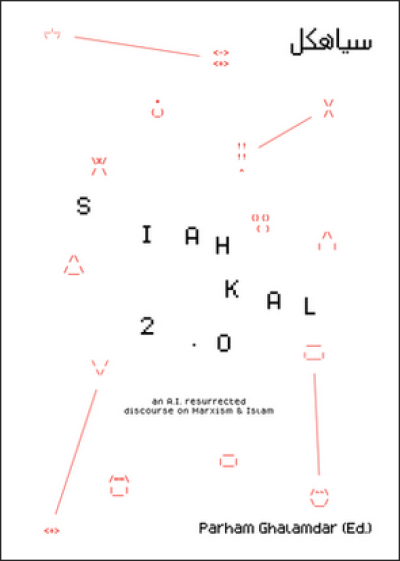
SIAHKAL 2.0: An A.I. resurrected discourse on Marxism & Islam


Siahkal names a place in the forests of Gilan and a threshold in revolutionary time. In 1971 a guerrilla action near Siahkal shook the order of the Shah. The action failed militarily yet seeded a myth for the People’s Fedai Guerrillas. Bizhan Jazani, a founding thinker, wrote and painted in prison and was executed in 1975. His work teaches that strategy rather than sentiment endures. // This book treats Siahkal as a Deep Object, a persistent attractor that gathers memory, images, and tactics. An AI model trained on Jazani’s writings and paintings translates his essay on Islamic Marxism and proposes annotations. The machine functions as a probe that widens attention while remaining accountable to the source. Parham Ghalamdar trained the AI, wrote the introduction, and composed ASCII diagrams and diagrammatic readings from Jazani’s artworks. Parsa Esmaeilzadeh contributes an essay that reads Jazani through Karatani and left accelerationism. // It is a call to reimagine and export revolution as a Deep Object that asks for Deep Time to unfold. This clandestine edition invites the reader to study, test, and build strategy that can outlast the news cycle and meet the future head on.

This is a limited edition book. The author trained an LLM on the texts of a deceased theorist, and then proceeded to interact with the LLM and produce simulations of what the theorist may have said in regards to various pertinent topics. The book is primarily a free online resource, but a few copies are being printed to commemorate the work. It has a foreword and afterword by the Editors.

At the core of this project is a translation of “Marxist Islam or Islamic Marxism,” a groundbreaking text written by Bizhan Jazani during his imprisonment in the 1970s under the Shah’s oppressive regime. Translated by Parham Ghalamdar, this work is accompanied by an introduction contextualizing Jazani’s radical vision. Ghalamdar also contributes a series of ASCII-style illustrations and diagrams—AI-assisted reinterpretations of Jazani’s original paintings and photographs—that bridge the past and present, offering a new perspective on his revolutionary artistry.


About the author
Parham Ghalamdar is a multidisciplinary artist currently based in the UK. Ghalamdar’s work traces forgotten mythologies, buried philosophies, and visual ruins, reconfiguring them into speculative worlds where memory, fiction, and futurism collapse into one another. Drawing on cybernetic theory and generative AI, he explores how systems of feedback, simulation, and machine vision mediate our understanding of history and possibility. Through painting, film, and writing, he builds narratives that feel both ancient and yet-to-come, haunted by lost histories and animated by possible futures.


Siahkal
names a place in the forests of Gilan and a threshold in revolutionary
time. In 1971 a guerrilla action near Siahkal shook the order of the
Shah. The action failed militarily yet seeded a myth for the People’s
Fedai Guerrillas. Bizhan Jazani, a founding thinker, wrote and painted
in prison and was executed in 1975. His work teaches that strategy
rather than sentiment endures. // This book treats Siahkal as a Deep
Object, a persistent attractor that gathers memory, images, and tactics.
An AI model trained on Jazani’s writings and paintings translates his
essay on Islamic Marxism and proposes annotations. The machine functions
as a probe that widens attention while remaining accountable to the
source. Parham Ghalamdar trained the AI, wrote the introduction, and
composed ASCII diagrams and diagrammatic readings from Jazani’s
artworks. Parsa Esmaeilzadeh contributes an essay that reads Jazani
through Karatani and left accelerationism. // It is a call to reimagine
and export revolution as a Deep Object that asks for Deep Time to
unfold. This clandestine edition invites the reader to study, test, and
build strategy that can outlast the news cycle and meet the future head
on.


This is a limited edition book. The author trained an LLM on the texts
of a deceased theorist, and then proceeded to interact with the LLM and
produce simulations of what the theorist may have said in regards to
various pertinent topics. The book is primarily a free online resource,
but a few copies are being printed to commemorate the work. It has a
foreword and afterword by the Editors.


At the core of this project is a translation of “Marxist Islam or
Islamic Marxism,” a groundbreaking text written by Bizhan Jazani during
his imprisonment in the 1970s under the Shah’s oppressive regime.
Translated by Parham Ghalamdar, this work is accompanied by an
introduction contextualizing Jazani’s radical vision. Ghalamdar also
contributes a series of ASCII-style illustrations and
diagrams—AI-assisted reinterpretations of Jazani’s original paintings
and photographs—that bridge the past and present, offering a new
perspective on his revolutionary artistry.


About the author

Parham Ghalamdar is a multidisciplinary artist currently based in the
UK. Ghalamdar’s work traces forgotten mythologies, buried philosophies,
and visual ruins, reconfiguring them into speculative worlds where
memory, fiction, and futurism collapse into one another. Drawing on
cybernetic theory and generative AI, he explores how systems of
feedback, simulation, and machine vision mediate our understanding of
history and possibility. Through painting, film, and writing, he builds
narratives that feel both ancient and yet-to-come, haunted by lost
histories and animated by possible futures.


Siahkal
names a place in the forests of Gilan and a threshold in revolutionary
time. In 1971 a guerrilla action near Siahkal shook the order of the
Shah. The action failed militarily yet seeded a myth for the People’s
Fedai Guerrillas. Bizhan Jazani, a founding thinker, wrote and painted
in prison and was executed in 1975. His work teaches that strategy
rather than sentiment endures. // This book treats Siahkal as a Deep
Object, a persistent attractor that gathers memory, images, and tactics.
An AI model trained on Jazani’s writings and paintings translates his
essay on Islamic Marxism and proposes annotations. The machine functions
as a probe that widens attention while remaining accountable to the
source. Parham Ghalamdar trained the AI, wrote the introduction, and
composed ASCII diagrams and diagrammatic readings from Jazani’s
artworks. Parsa Esmaeilzadeh contributes an essay that reads Jazani
through Karatani and left accelerationism. // It is a call to reimagine
and export revolution as a Deep Object that asks for Deep Time to
unfold. This clandestine edition invites the reader to study, test, and
build strategy that can outlast the news cycle and meet the future head
on.


This is a limited edition book. The author trained an LLM on the texts
of a deceased theorist, and then proceeded to interact with the LLM and
produce simulations of what the theorist may have said in regards to
various pertinent topics. The book is primarily a free online resource,
but a few copies are being printed to commemorate the work. It has a
foreword and afterword by the Editors.


At the core of this project is a translation of “Marxist Islam or
Islamic Marxism,” a groundbreaking text written by Bizhan Jazani during
his imprisonment in the 1970s under the Shah’s oppressive regime.
Translated by Parham Ghalamdar, this work is accompanied by an
introduction contextualizing Jazani’s radical vision. Ghalamdar also
contributes a series of ASCII-style illustrations and
diagrams—AI-assisted reinterpretations of Jazani’s original paintings
and photographs—that bridge the past and present, offering a new
perspective on his revolutionary artistry.


About the author

Parham Ghalamdar is a multidisciplinary artist currently based in the
UK. Ghalamdar’s work traces forgotten mythologies, buried philosophies,
and visual ruins, reconfiguring them into speculative worlds where
memory, fiction, and futurism collapse into one another. Drawing on
cybernetic theory and generative AI, he explores how systems of
feedback, simulation, and machine vision mediate our understanding of
history and possibility. Through painting, film, and writing, he builds
narratives that feel both ancient and yet-to-come, haunted by lost
histories and animated by possible futures.


Siahkal names a place in the forests of Gilan and a threshold in revolutionary time. In 1971 a guerrilla action near Siahkal shook the order of the Shah. The action failed militarily yet seeded a myth for the People’s Fedai Guerrillas. Bizhan Jazani, a founding thinker, wrote and painted in prison and was executed in 1975. His work teaches that strategy rather than sentiment endures. // This book treats Siahkal as a Deep Object, a persistent attractor that gathers memory, images, and tactics. An AI model trained on Jazani’s writings and paintings translates his essay on Islamic Marxism and proposes annotations. The machine functions as a probe that widens attention while remaining accountable to the source. Parham Ghalamdar trained the AI, wrote the introduction, and composed ASCII diagrams and diagrammatic readings from Jazani’s artworks. Parsa Esmaeilzadeh contributes an essay that reads Jazani through Karatani and left accelerationism. // It is a call to reimagine and export revolution as a Deep Object that asks for Deep Time to unfold. This clandestine edition invites the reader to study, test, and build strategy that can outlast the news cycle and meet the future head on.

This is a limited edition book. The author trained an LLM on the texts of a deceased theorist, and then proceeded to interact with the LLM and produce simulations of what the theorist may have said in regards to various pertinent topics. The book is primarily a free online resource, but a few copies are being printed to commemorate the work. It has a foreword and afterword by the Editors. 

At the core of this project is a translation of “Marxist Islam or Islamic Marxism,” a groundbreaking text written by Bizhan Jazani during his imprisonment in the 1970s under the Shah’s oppressive regime. Translated by Parham Ghalamdar, this work is accompanied by an introduction contextualizing Jazani’s radical vision. Ghalamdar also contributes a series of ASCII-style illustrations and diagrams—AI-assisted reinterpretations of Jazani’s original paintings and photographs—that bridge the past and present, offering a new perspective on his revolutionary artistry.


“Bizhan Jazani”, Parham Ghalamdar
SIAHKAL 2.0: An A.I. resurrected discourse on Marxism & Islam
Becoming Press, 2025, 978-9925-8207-7-1
15,00 €