







Direkt zum Inhalt

Warenkorb

  • Dario Azzellini, Marina Sitrin

    They Can't Represent Us! Reinventing Democracy from…

  • gerade nicht auf Lager
    Valentin Groebner

    Wissenschaftssprache digital. Die Zukunft von gestern

  • gerade nicht auf Lager
    Deyan Sudjic

    B is for Bauhaus. An A-Z of the Modern World

  • gerade nicht auf Lager
    Hans Ulrich Obrist

    Ways of Curating

  • gerade nicht auf Lager
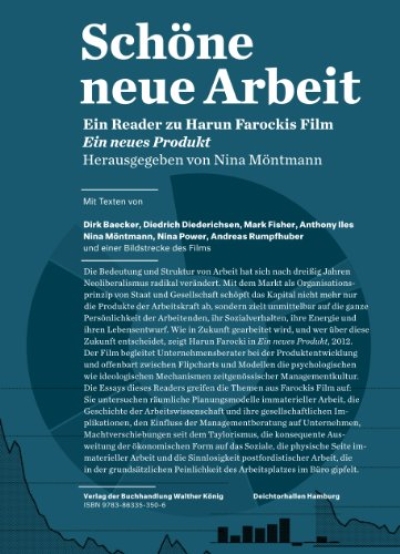
    Nina Möntmann (Ed.)

    Schöne Neue Arbeit / Brave New Work. Ein Reader zu Harun…

  • gerade nicht auf Lager
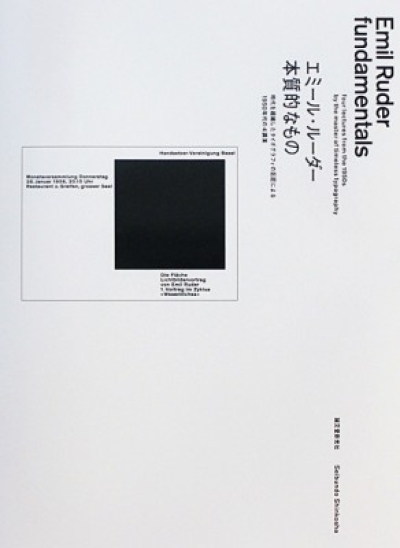
    Emil Ruder

    Fundamentals

  • gerade nicht auf Lager
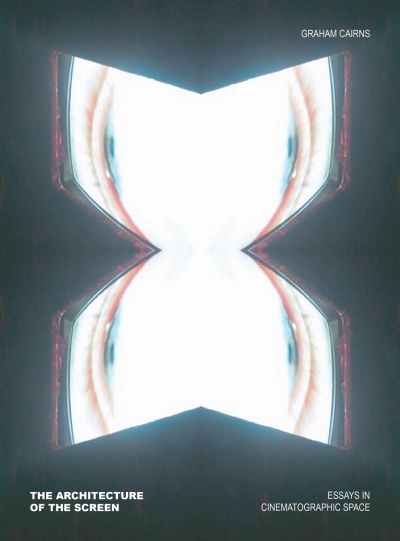
    Graham Cairns

    The Architecture of the Screen

  • gerade nicht auf Lager
    Andrej Holm

    Mietenwahnsinn

  • gerade nicht auf Lager
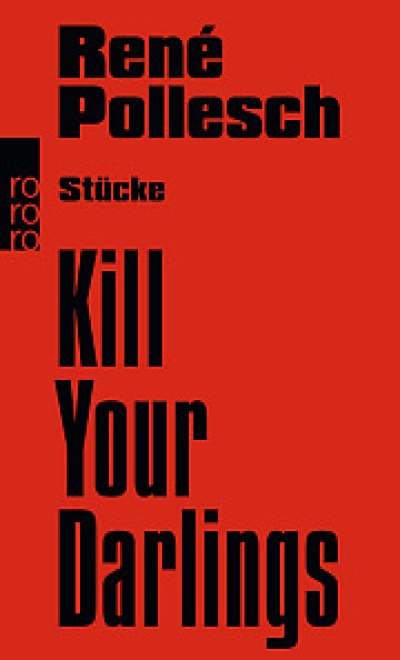
    René Pollesch

    Kill Your Darlings

  • gerade nicht auf Lager
    Helmut Lethen

    Der Schatten des Fotografen

  • gerade nicht auf Lager
    Cathy Lane, Angus Carlyle

    In the Field. The Art of Field Recording

  • gerade nicht auf Lager
    Diedrich Diederichsen

    Über Pop-Musik

  • gerade nicht auf Lager
    Helmut C. Schulitz

    Entfesselung der Architektur. Der Architekt: Baumeister…

  • gerade nicht auf Lager
    Elisabeth Roudinesco

    Lacan. In Spite Of Everything

  • gerade nicht auf Lager
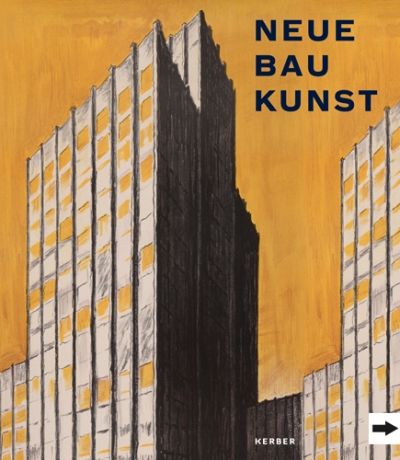
    Claudia Quiring, Andreas Rothaus,…

    Neue Baukunst. Architektur der Moderne in Bild und Buch

  • gerade nicht auf Lager
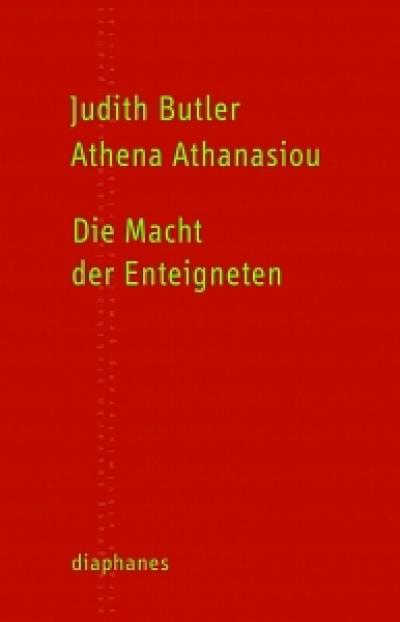
    Judith Butler, Athena Athanasiou

    Die Macht der Enteigneten. Das Performative im Politischen

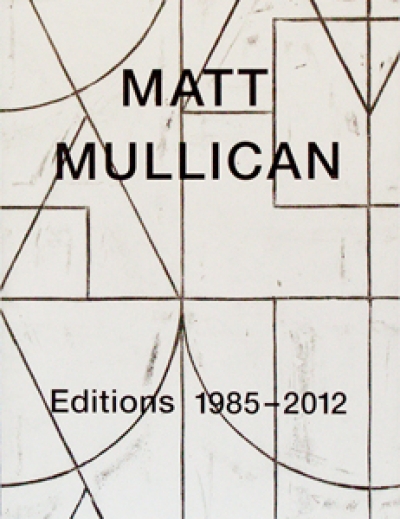
  • Matt Mullican

    Editions 1985-2012

  • gerade nicht auf Lager
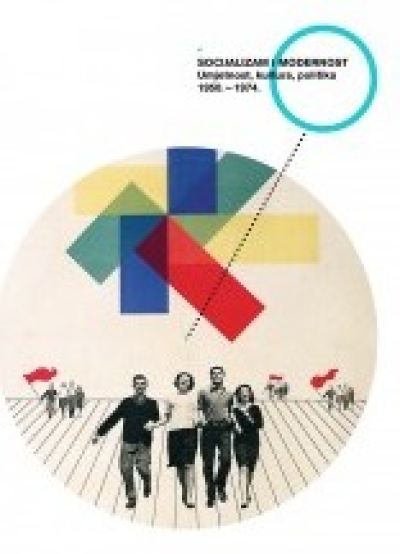
    Ljiljana Kolešnik (Ed.)

    Socialism and Modernity. Art, Culture, Politics 1950 – 1974

  • Birkenstock, Kastner, Sonderegger (Eds.)

    Kunst und Ideologiekritik nach 1989 / Art and the Critique…

  • Yilmaz Dziewior (Ed.)

    Liebe ist kälter als das Kapital. Love is colder than…

  • gerade nicht auf Lager
    Emmett Williams

    An Anthology of Concrete Poetry

  • gerade nicht auf Lager
    Beatriz Colomina

    Manifesto Architecture. The Ghost of Mies

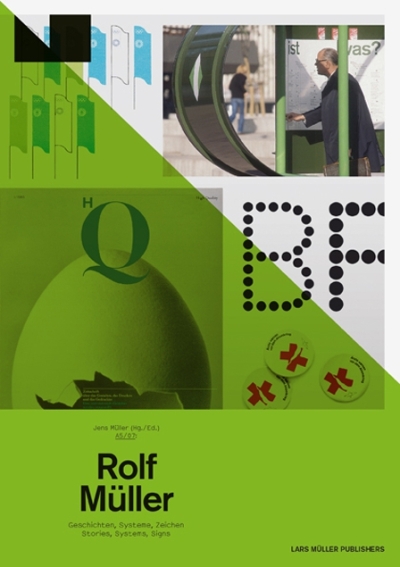
  • Jens Müller (Ed.)

    Rolf Müller

  • gerade nicht auf Lager
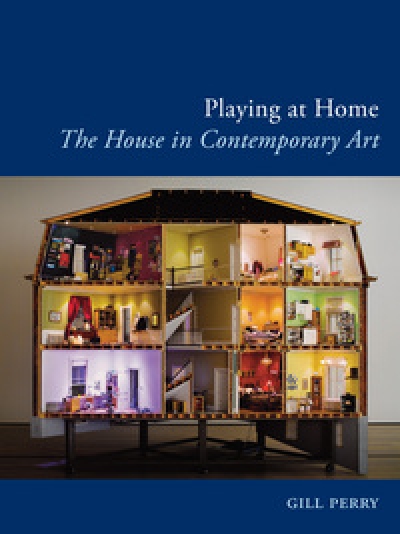
    Gill Perry

    Playing at Home. The House in Contemporary Art

  • gerade nicht auf Lager
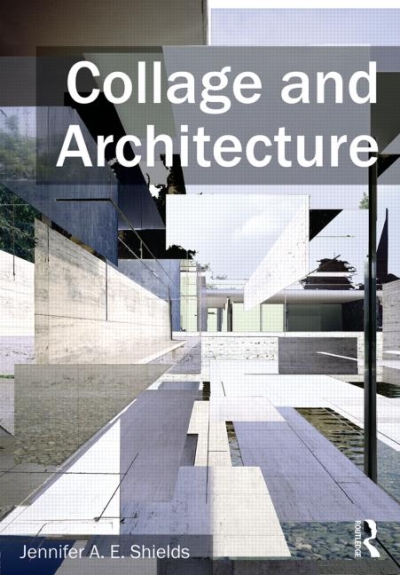
    Jennifer A.E. Shields

    Collage and Architecture

  • gerade nicht auf Lager
    Petra Reichensperger (Ed.)

    Begriffe des Ausstellens (von A bis Z). Terms of Exhibiting…

  • gerade nicht auf Lager
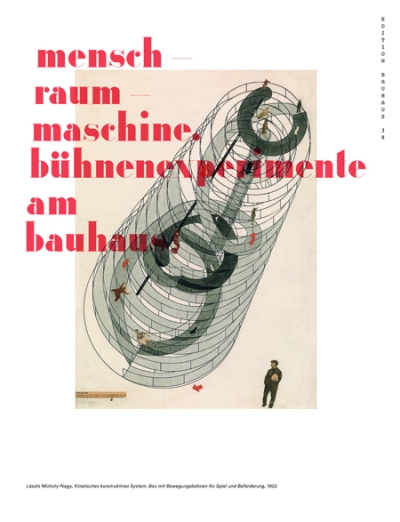
    Torsten Blume, Christian Hiller (Hg.)

    Mensch - Raum – Maschine. Bühnenexperimente am Bauhaus

  • Richard Birkett (Ed.)

    and Materials and Money and Crisis

  • gerade nicht auf Lager
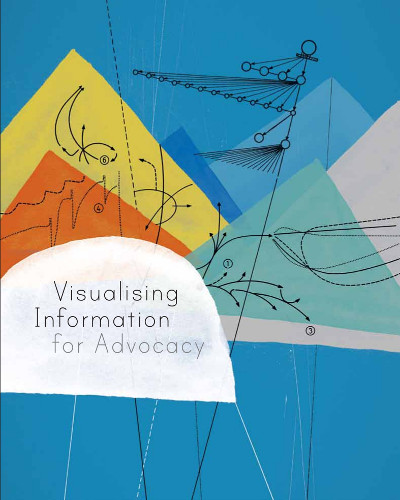
    Tactical Technology Collective

    Visualising Information for Advocacy

  • gerade nicht auf Lager
    Emma Lavigne

    Pierre Huyghe

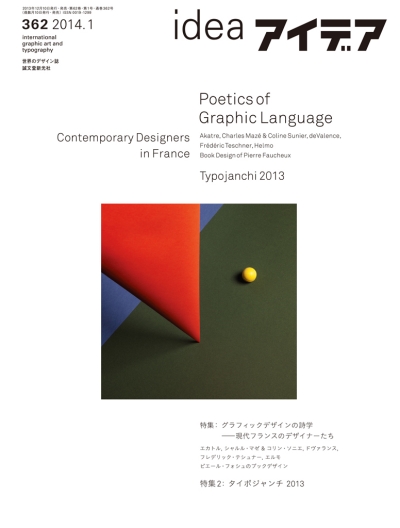
  • IDEA Magazine

    IDEA 362. Poetics of Graphic Language. Contemporary…

  • gerade nicht auf Lager
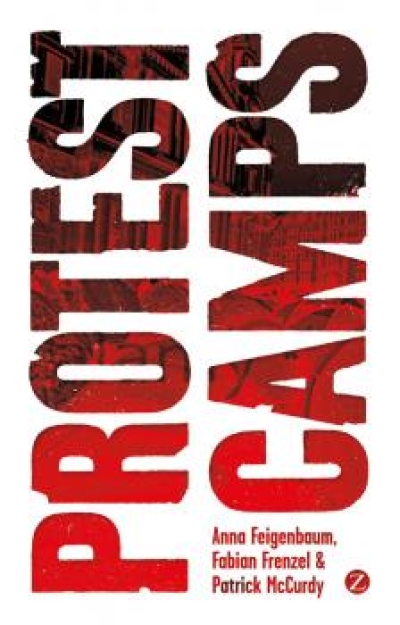
    Anna Feigenbaum, Fabian Frenzel,…

    Protest Camps

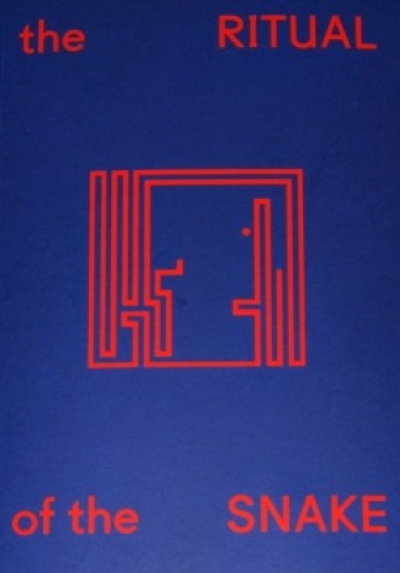
  • Gianni Politi

    The Ritual of the Snake

  • gerade nicht auf Lager
    Andrew Hemingway

    The Mysticism of Money. Precisionist Painting and Machine…

  • gerade nicht auf Lager
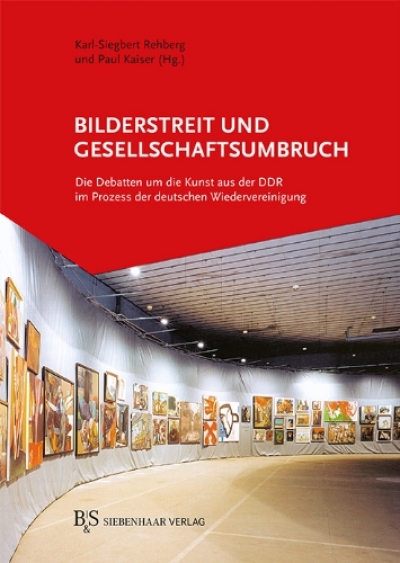
    Karl-Siegbert Rehberg, Paul Kaiser (Hg.)

    Bilderstreit und Gesellschaftsumbruch. Die Debatte um die…

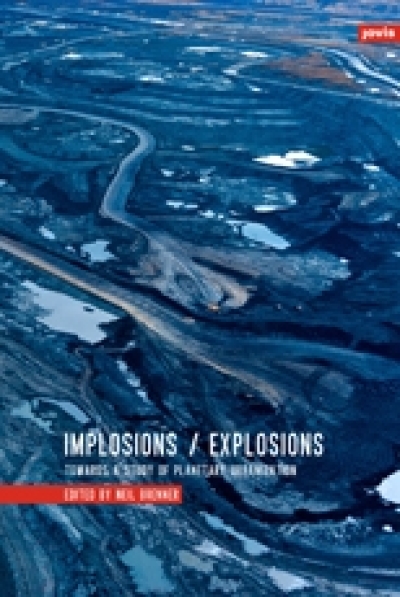
  • Neil Brenner (Ed.)

    Implosions / Explosions. Towards a Study of Planetary…

  • gerade nicht auf Lager
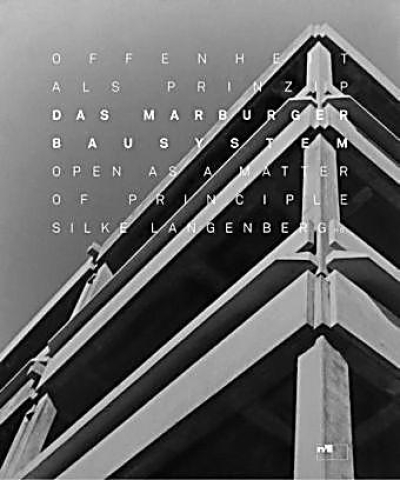
    Silke Langenberg (Hrsg.)

    Das Marburger Bausystem. Offenheit als Prinzip

  • gerade nicht auf Lager
    Langley, Pearce, Worth (Ed.)

    After Butler's Wharf. Essays on a Working Building

  • gerade nicht auf Lager
    Sven Völker (Ed.)

    Some Book. Graphic Expressions between Design and Art

  • gerade nicht auf Lager
    Juergen Teller

    Common Ground. In Photographs

  • gerade nicht auf Lager
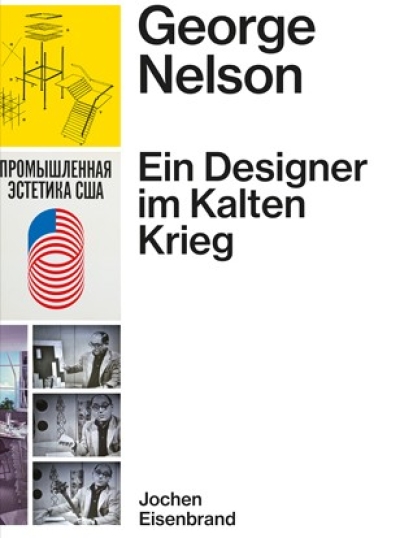
    Jochen Eisenbrand

    George Nelson. Ein Designer im Kalten Krieg

  • gerade nicht auf Lager
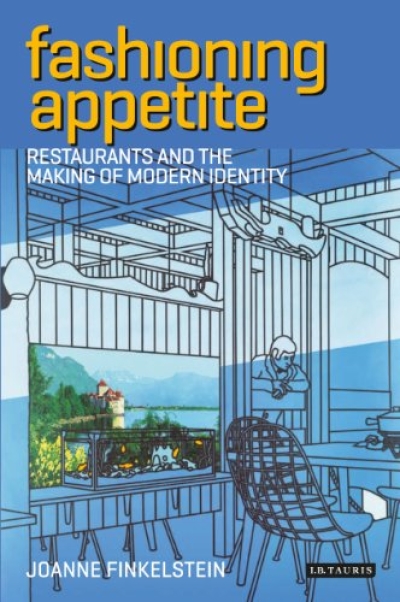
    Joanne Finkelstein

    Fashioning Appetite. Restaurants and the Making of Modern…

  • Gunnar Hindrichs

    Die Autonomie des Klangs - Eine Philosophie der Musik

  • gerade nicht auf Lager
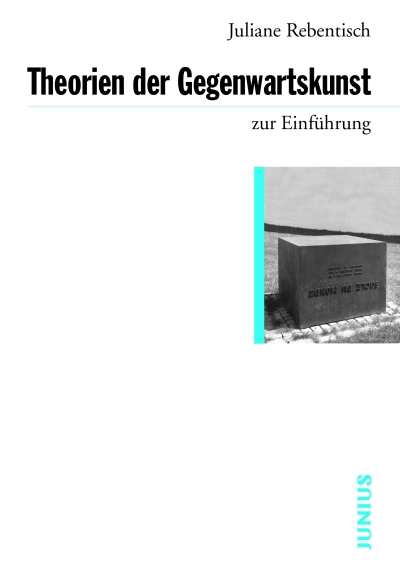
    Juliane Rebentisch

    Theorien der Gegenwartskunst

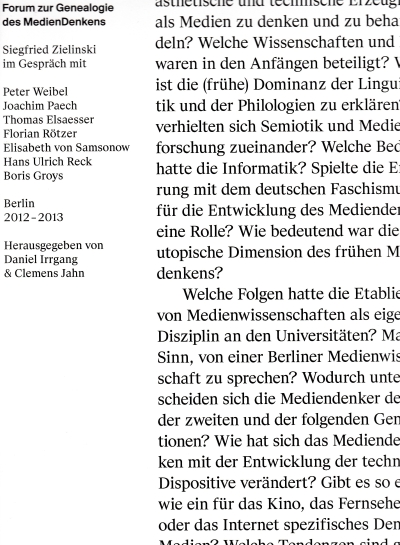
  • Daniel Irrgang, Clemens Jahn (Hg.)

    Forum zur Genealogie des MedienDenkens II. Siegfried…

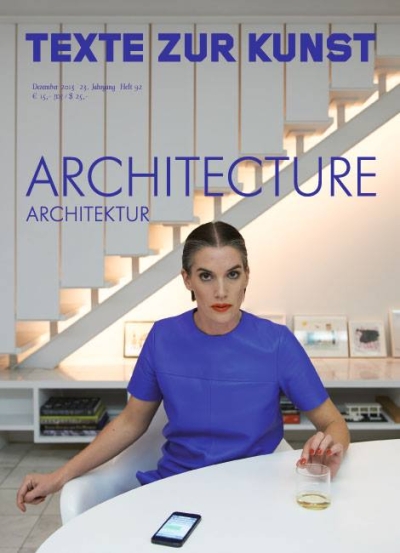
  • Texte zur Kunst Heft 92

    Architecture / Architektur

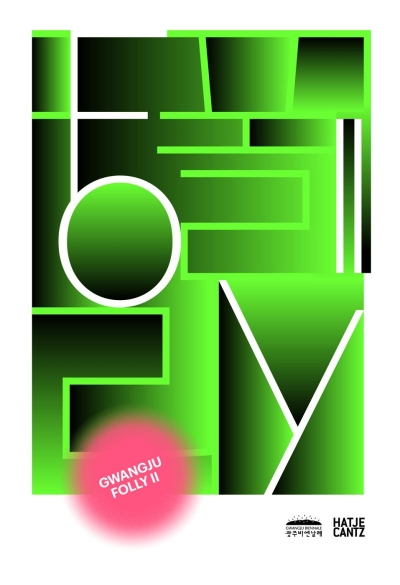
  • Philipp Misselwitz, Eui Young Chun,…

    Gwangju Folly II

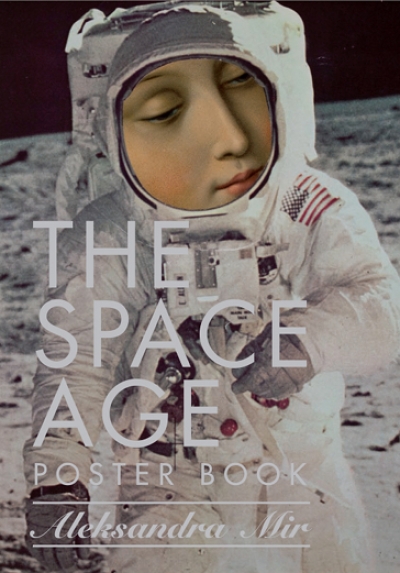
  • Aleksandra Mir

    The Space Age. Poster Book

  • Sergio B. Martins

    Constructing an Avant-Garde. Art in Brazil 1949-1979

  • Centrum Architektury (Ed.)

    For Example. New Polish House. A Book

  • gerade nicht auf Lager
    John Grindrod

    Concretopia. A Journey Around the Rebuilding of Postwar…

  • gerade nicht auf Lager
    Grzegorz Piątek

    AR/PS. The Architecture of Arseniusz Romanowicz and Piotr…

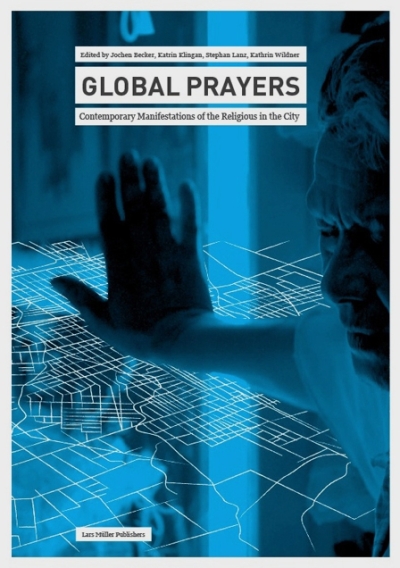
  • metroZones 13

    Global Prayers. Contemporary Manifestations of the…

  • gerade nicht auf Lager
    Beatriz Preciado

    Testo Junkie. Sex, Drugs, and Biopolitics in the…

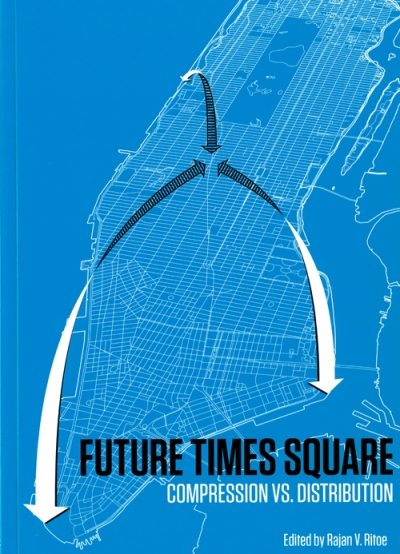
  • Rajan V. Ritoe (Ed.)

    Future Times Square. Compression vs. Distribution

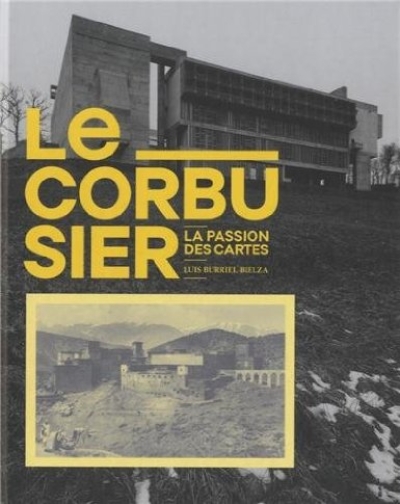
  • Luis Burriel Bielza

    Le Corbusier. La passion des cartes

  • gerade nicht auf Lager
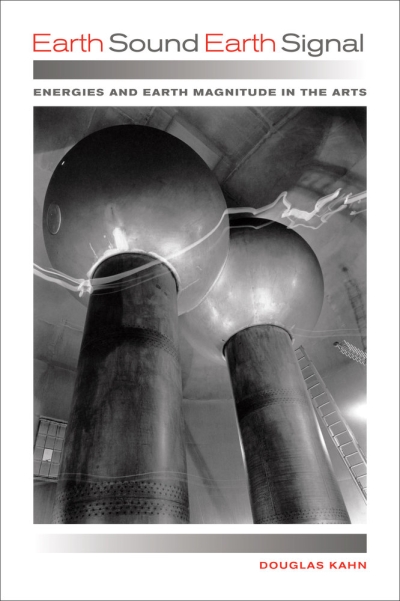
    Douglas Kahn

    Earth Sound Earth Signal

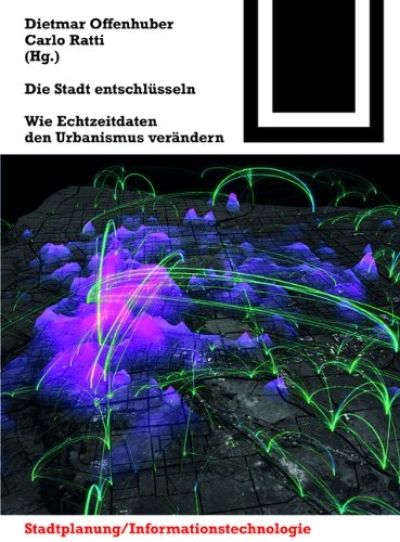
  • Dietmar Offenhuber, Carlo Ratti (Hg.)

    Die Stadt entschlüsseln. Wie Echtzeitdaten den Urbanismus…

  • Dietmar Dath, Swantje Karich

    Lichtmächte. Kino – Museum – Galerie – Öffentlichkeit

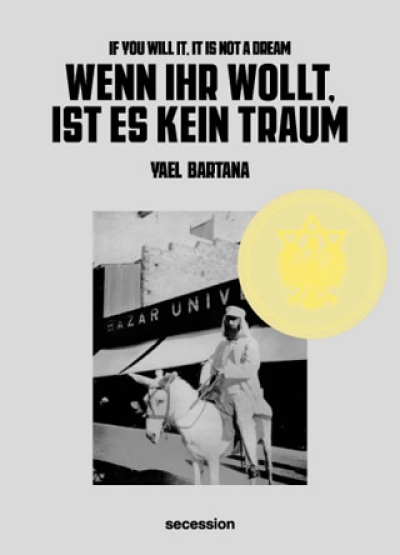
  • Yael Bartana

    Wenn Ihr wollt, ist es kein Traum. If you will it, it is…

  • Julia Czerniak (Ed.)

    Formerly Urban. Projecting Rust Belt Futures

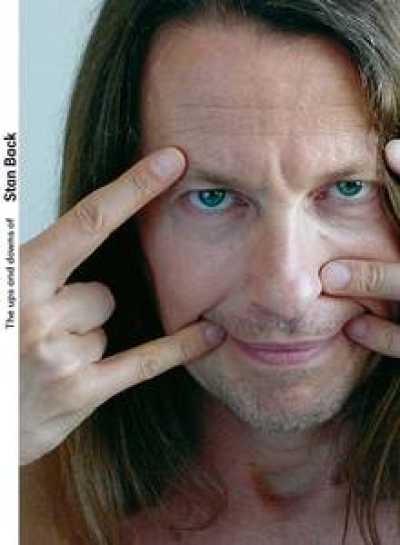
  • Stefan Römer

    The ups and downs of Stan Back

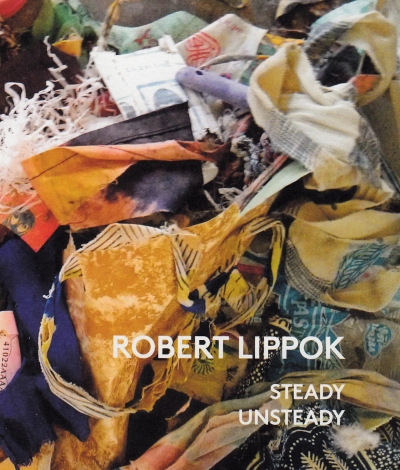
  • Robert Lippok

    Steady Unsteady

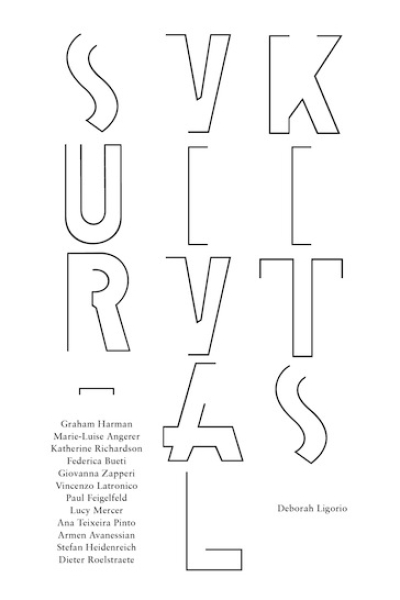
  • Deborah Ligorio

    Survival Kits

  • Barbara Vinken

    Angezogen. Das Geheimnis der Mode

  • Heimo Lattner

    A Voice That Once Was In One's Mouth

  • gerade nicht auf Lager
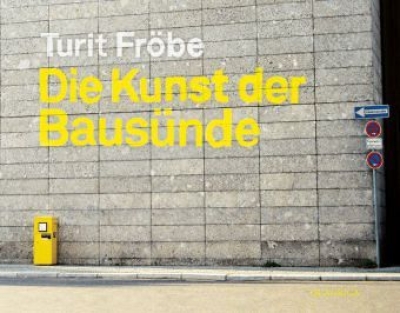
    Turit Fröbe

    Die Kunst der Bausünde

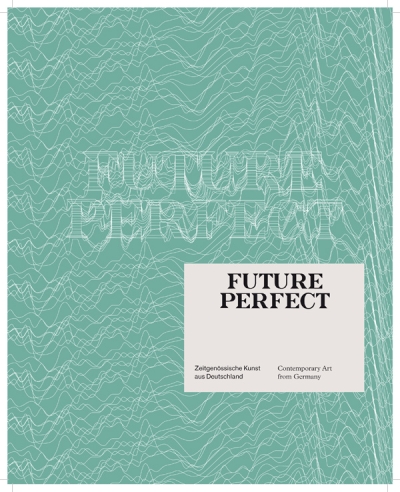
  • IFA (Ed.)

    Future Perfect. Contemporary Art from Germany

  • gerade nicht auf Lager
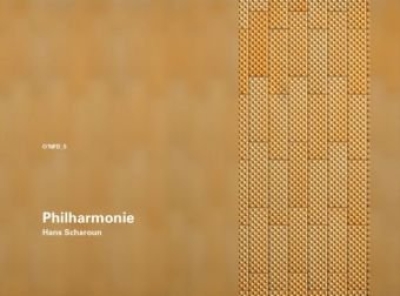
    Wilfried Wang, Dan Sylvester (Hg.)

    Hans Scharoun. Philharmonie

  • Chair of Prof. Dr. Josep Lluís Mateo…

    Middle East. Landscape City Architecture

  • Anna Schober

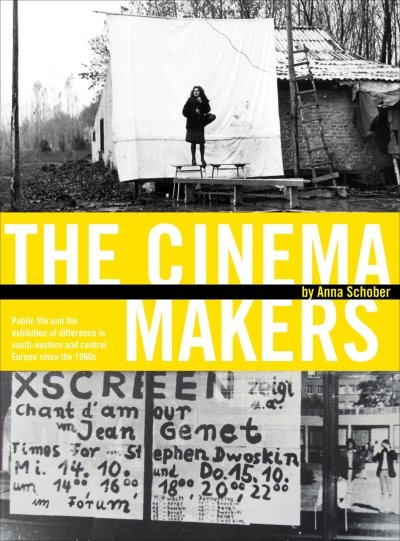
    The Cinema Makers. Public Life and the Exhibition of…

  • von Borries, Ahlert, Fischer (Hrsg.)

    Die Berliner Weltverbesserungsmaschine. Die Rekonstruktion…

  • Friedrich von Borries, Jens-Uwe Fischer

    Die Berliner Weltverbesserungsmaschine. Die Geschichte (…

  • Sven Lütticken

    History in Motion. Time in the Age of the Moving Image

  • Kevin C. Smith

    Recombo DNA. The Story of Devo, or How the 60s Became the…

  • Bastian Lange, Gottfried Prasenc,…

    Ortsentwürfe. Urbanität im 21. Jahrhundert

  • Claudia Mareis, Matthias Held, Gesche…

    Wer gestaltet die Gestaltung? Praxis, Theorie und…

  • Jean-Luc Nancy

    Äquivalenz der Katastrophen (Nach Fukushima)

  • gerade nicht auf Lager
    Rem Koolhaas, Hal Foster

    Junkspace with Running Room

  • Hilke Wagner, Axel Wieder (Eds.)

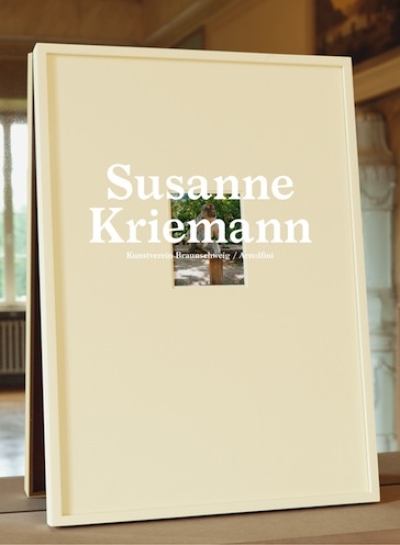
    Susanne Kriemann

  • Lionel Bovier

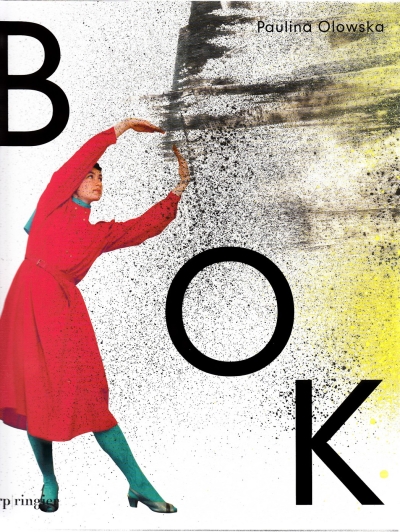
    Paulina Olowska. Book

  • Anri Sala

    Ravel Ravel Unravel

  • Anne Huffschmid, Kathrin Wildner (Hg.)

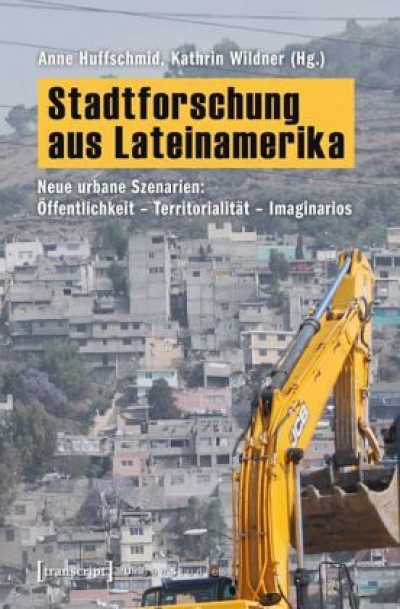
    Stadtforschung aus Lateinamerika: Neue urbane Szenarien.…

  • gerade nicht auf Lager
    Jonathan Crary

    24/7. Late Capitalism and the Ends of Sleep

  • Thomas Keenan, Tirdad Zolghadr (Eds.)

    The Human Snapshot

  • gerade nicht auf Lager
    Between Artists

    Thom Andersen / William E. Jones

  • Heidrun Holzfeind

    Strictly Private

  • gerade nicht auf Lager
    Doreen Mende, Estelle Blaschke, Armin…

    Doppelte Ökonomien / Double Bound Economies

  • Bernadette Corporation

    Reena Spaulings. A Novel by Bernadette Corporation

  • gerade nicht auf Lager
    Peter Osborne

    Anywhere or Not at All. The Philosophy of Contemporary Art

  • gerade nicht auf Lager
    Richard Shone, John-Paul Stonard (Ed.)

    The Books that Shaped Art History. From Gombrich and…

  • gerade nicht auf Lager
    Flora Samuel, Inge Linder-Gaillard

    Sacred Concrete. The Churches of le Corbusier

  • gerade nicht auf Lager
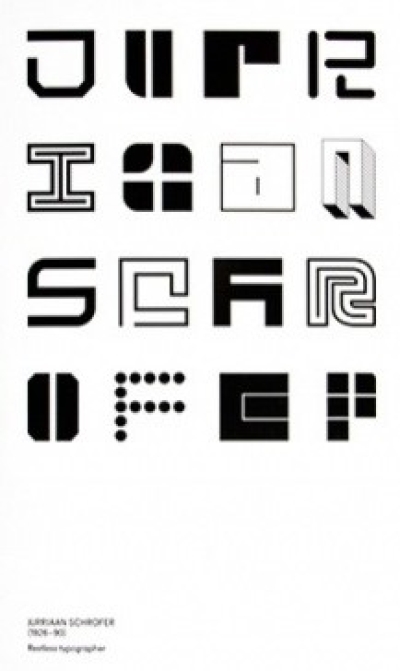
    Unit Editions (Ed.)

    Jurriaan Schrofer (1926-90). Restless typographer

  • gerade nicht auf Lager
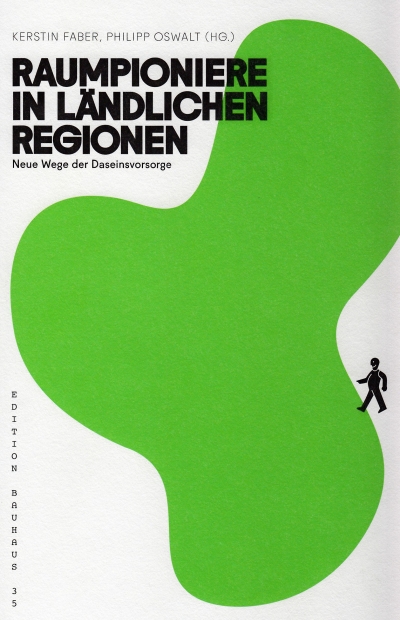
    Kerstin Faber, Philipp Oswalt (Hg.)

    Raumpioniere in ländlichen Regionen. Neue Wege der…

  • gerade nicht auf Lager
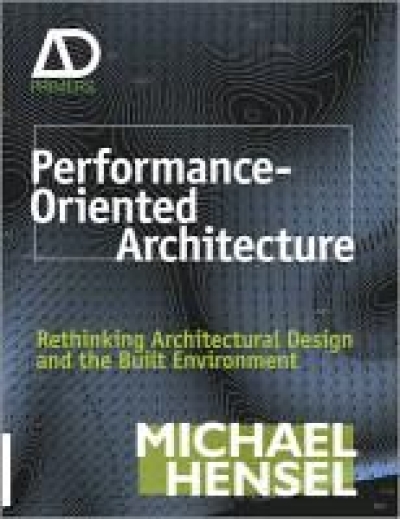
    Michael Hensel

    Performance-Oriented Architecture. Rethinking Architectural…

  • gerade nicht auf Lager
    Christoph Menke

    Die Kraft der Kunst

  • gerade nicht auf Lager
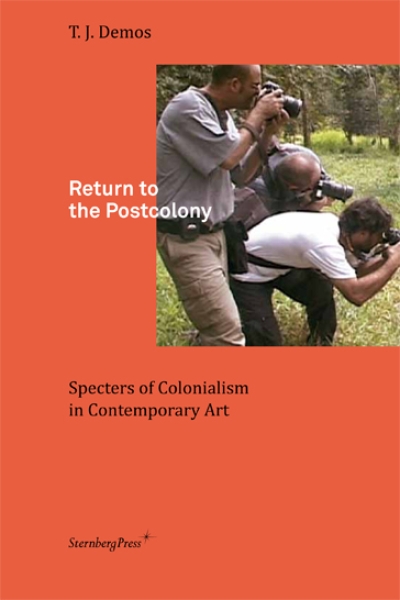
    T. J. Demos

    Return to the Postcolony

  • IDEA Magazine

    IDEA 357. Architecture in Print: The Development of…

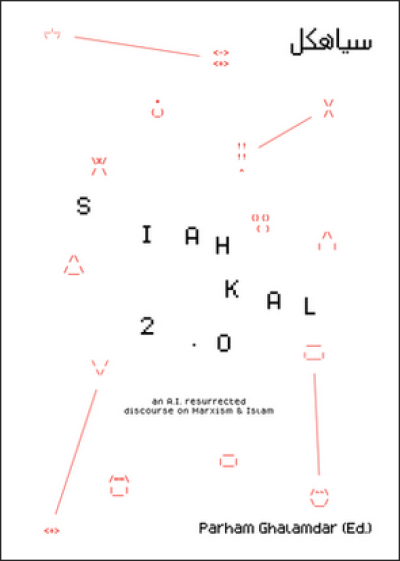
SIAHKAL 2.0: An A.I. resurrected discourse on Marxism & Islam


Siahkal names a place in the forests of Gilan and a threshold in revolutionary time. In 1971 a guerrilla action near Siahkal shook the order of the Shah. The action failed militarily yet seeded a myth for the People’s Fedai Guerrillas. Bizhan Jazani, a founding thinker, wrote and painted in prison and was executed in 1975. His work teaches that strategy rather than sentiment endures. // This book treats Siahkal as a Deep Object, a persistent attractor that gathers memory, images, and tactics. An AI model trained on Jazani’s writings and paintings translates his essay on Islamic Marxism and proposes annotations. The machine functions as a probe that widens attention while remaining accountable to the source. Parham Ghalamdar trained the AI, wrote the introduction, and composed ASCII diagrams and diagrammatic readings from Jazani’s artworks. Parsa Esmaeilzadeh contributes an essay that reads Jazani through Karatani and left accelerationism. // It is a call to reimagine and export revolution as a Deep Object that asks for Deep Time to unfold. This clandestine edition invites the reader to study, test, and build strategy that can outlast the news cycle and meet the future head on.

This is a limited edition book. The author trained an LLM on the texts of a deceased theorist, and then proceeded to interact with the LLM and produce simulations of what the theorist may have said in regards to various pertinent topics. The book is primarily a free online resource, but a few copies are being printed to commemorate the work. It has a foreword and afterword by the Editors.

At the core of this project is a translation of “Marxist Islam or Islamic Marxism,” a groundbreaking text written by Bizhan Jazani during his imprisonment in the 1970s under the Shah’s oppressive regime. Translated by Parham Ghalamdar, this work is accompanied by an introduction contextualizing Jazani’s radical vision. Ghalamdar also contributes a series of ASCII-style illustrations and diagrams—AI-assisted reinterpretations of Jazani’s original paintings and photographs—that bridge the past and present, offering a new perspective on his revolutionary artistry.


About the author
Parham Ghalamdar is a multidisciplinary artist currently based in the UK. Ghalamdar’s work traces forgotten mythologies, buried philosophies, and visual ruins, reconfiguring them into speculative worlds where memory, fiction, and futurism collapse into one another. Drawing on cybernetic theory and generative AI, he explores how systems of feedback, simulation, and machine vision mediate our understanding of history and possibility. Through painting, film, and writing, he builds narratives that feel both ancient and yet-to-come, haunted by lost histories and animated by possible futures.


Siahkal
names a place in the forests of Gilan and a threshold in revolutionary
time. In 1971 a guerrilla action near Siahkal shook the order of the
Shah. The action failed militarily yet seeded a myth for the People’s
Fedai Guerrillas. Bizhan Jazani, a founding thinker, wrote and painted
in prison and was executed in 1975. His work teaches that strategy
rather than sentiment endures. // This book treats Siahkal as a Deep
Object, a persistent attractor that gathers memory, images, and tactics.
An AI model trained on Jazani’s writings and paintings translates his
essay on Islamic Marxism and proposes annotations. The machine functions
as a probe that widens attention while remaining accountable to the
source. Parham Ghalamdar trained the AI, wrote the introduction, and
composed ASCII diagrams and diagrammatic readings from Jazani’s
artworks. Parsa Esmaeilzadeh contributes an essay that reads Jazani
through Karatani and left accelerationism. // It is a call to reimagine
and export revolution as a Deep Object that asks for Deep Time to
unfold. This clandestine edition invites the reader to study, test, and
build strategy that can outlast the news cycle and meet the future head
on.


This is a limited edition book. The author trained an LLM on the texts
of a deceased theorist, and then proceeded to interact with the LLM and
produce simulations of what the theorist may have said in regards to
various pertinent topics. The book is primarily a free online resource,
but a few copies are being printed to commemorate the work. It has a
foreword and afterword by the Editors.


At the core of this project is a translation of “Marxist Islam or
Islamic Marxism,” a groundbreaking text written by Bizhan Jazani during
his imprisonment in the 1970s under the Shah’s oppressive regime.
Translated by Parham Ghalamdar, this work is accompanied by an
introduction contextualizing Jazani’s radical vision. Ghalamdar also
contributes a series of ASCII-style illustrations and
diagrams—AI-assisted reinterpretations of Jazani’s original paintings
and photographs—that bridge the past and present, offering a new
perspective on his revolutionary artistry.


About the author

Parham Ghalamdar is a multidisciplinary artist currently based in the
UK. Ghalamdar’s work traces forgotten mythologies, buried philosophies,
and visual ruins, reconfiguring them into speculative worlds where
memory, fiction, and futurism collapse into one another. Drawing on
cybernetic theory and generative AI, he explores how systems of
feedback, simulation, and machine vision mediate our understanding of
history and possibility. Through painting, film, and writing, he builds
narratives that feel both ancient and yet-to-come, haunted by lost
histories and animated by possible futures.


Siahkal
names a place in the forests of Gilan and a threshold in revolutionary
time. In 1971 a guerrilla action near Siahkal shook the order of the
Shah. The action failed militarily yet seeded a myth for the People’s
Fedai Guerrillas. Bizhan Jazani, a founding thinker, wrote and painted
in prison and was executed in 1975. His work teaches that strategy
rather than sentiment endures. // This book treats Siahkal as a Deep
Object, a persistent attractor that gathers memory, images, and tactics.
An AI model trained on Jazani’s writings and paintings translates his
essay on Islamic Marxism and proposes annotations. The machine functions
as a probe that widens attention while remaining accountable to the
source. Parham Ghalamdar trained the AI, wrote the introduction, and
composed ASCII diagrams and diagrammatic readings from Jazani’s
artworks. Parsa Esmaeilzadeh contributes an essay that reads Jazani
through Karatani and left accelerationism. // It is a call to reimagine
and export revolution as a Deep Object that asks for Deep Time to
unfold. This clandestine edition invites the reader to study, test, and
build strategy that can outlast the news cycle and meet the future head
on.


This is a limited edition book. The author trained an LLM on the texts
of a deceased theorist, and then proceeded to interact with the LLM and
produce simulations of what the theorist may have said in regards to
various pertinent topics. The book is primarily a free online resource,
but a few copies are being printed to commemorate the work. It has a
foreword and afterword by the Editors.


At the core of this project is a translation of “Marxist Islam or
Islamic Marxism,” a groundbreaking text written by Bizhan Jazani during
his imprisonment in the 1970s under the Shah’s oppressive regime.
Translated by Parham Ghalamdar, this work is accompanied by an
introduction contextualizing Jazani’s radical vision. Ghalamdar also
contributes a series of ASCII-style illustrations and
diagrams—AI-assisted reinterpretations of Jazani’s original paintings
and photographs—that bridge the past and present, offering a new
perspective on his revolutionary artistry.


About the author

Parham Ghalamdar is a multidisciplinary artist currently based in the
UK. Ghalamdar’s work traces forgotten mythologies, buried philosophies,
and visual ruins, reconfiguring them into speculative worlds where
memory, fiction, and futurism collapse into one another. Drawing on
cybernetic theory and generative AI, he explores how systems of
feedback, simulation, and machine vision mediate our understanding of
history and possibility. Through painting, film, and writing, he builds
narratives that feel both ancient and yet-to-come, haunted by lost
histories and animated by possible futures.


Siahkal names a place in the forests of Gilan and a threshold in revolutionary time. In 1971 a guerrilla action near Siahkal shook the order of the Shah. The action failed militarily yet seeded a myth for the People’s Fedai Guerrillas. Bizhan Jazani, a founding thinker, wrote and painted in prison and was executed in 1975. His work teaches that strategy rather than sentiment endures. // This book treats Siahkal as a Deep Object, a persistent attractor that gathers memory, images, and tactics. An AI model trained on Jazani’s writings and paintings translates his essay on Islamic Marxism and proposes annotations. The machine functions as a probe that widens attention while remaining accountable to the source. Parham Ghalamdar trained the AI, wrote the introduction, and composed ASCII diagrams and diagrammatic readings from Jazani’s artworks. Parsa Esmaeilzadeh contributes an essay that reads Jazani through Karatani and left accelerationism. // It is a call to reimagine and export revolution as a Deep Object that asks for Deep Time to unfold. This clandestine edition invites the reader to study, test, and build strategy that can outlast the news cycle and meet the future head on.

This is a limited edition book. The author trained an LLM on the texts of a deceased theorist, and then proceeded to interact with the LLM and produce simulations of what the theorist may have said in regards to various pertinent topics. The book is primarily a free online resource, but a few copies are being printed to commemorate the work. It has a foreword and afterword by the Editors. 

At the core of this project is a translation of “Marxist Islam or Islamic Marxism,” a groundbreaking text written by Bizhan Jazani during his imprisonment in the 1970s under the Shah’s oppressive regime. Translated by Parham Ghalamdar, this work is accompanied by an introduction contextualizing Jazani’s radical vision. Ghalamdar also contributes a series of ASCII-style illustrations and diagrams—AI-assisted reinterpretations of Jazani’s original paintings and photographs—that bridge the past and present, offering a new perspective on his revolutionary artistry.


“Bizhan Jazani”, Parham Ghalamdar
SIAHKAL 2.0: An A.I. resurrected discourse on Marxism & Islam
Becoming Press, 2025, 978-9925-8207-7-1
15,00 €