











Direkt zum Inhalt

Warenkorb

  • Alain Badiou

    Wofür steht der Name Sarkozy?

  • gerade nicht auf Lager
    Donna Haraway

    Die Neuerfindung der Natur. Primaten, Cyborgs und Frauen.

  • gerade nicht auf Lager
    Stefanie Schulte Strathaus, Florian…

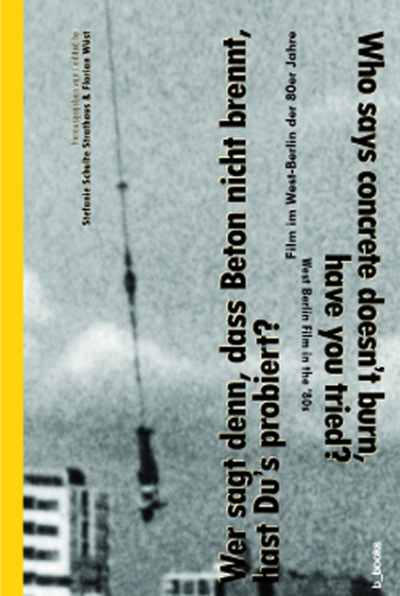
    Wer sagt denn, dass Beton nicht brennt, hast Du’s probiert?

  • gerade nicht auf Lager
    Henri Lefebvre

    Writings on Cities

  • Loretta Napoleoni

    Rogue Economics. Capitalism's New Reality

  • AD

    AD 174. Vol. 75. Nr. 2. Samantha Hardingham. The 1970'…

  • An Architektur

    An Architektur 18: Camp for Oppositional Architecture:…

  • Johan Frederik Hartle

    Der geöffnete Raum. Zur Politik der ästhetischen Form

  • An Architektur

    An Architektur 16-17

  • Vera Beyer, Jutta Voorhoeve, Anselm…

    Das Bild ist der König. Repräsentation nach Louis Marin

  • An Architektur

    An Architektur 15 / FFM 11: Europäische…

  • An Architektur

    An Architektur 14: Camp for Oppositional Architecture

  • An Architektur

    An Architektur 11-13: Theorie und Praxis der Kartografie

  • An Architektur

    An Architektur 10: Gemeinschaftsräume

  • An Architektur

    An Architektur 04-09: Krieg und die Produktion von Raum

  • IDEA Magazine

    IDEA 296. Books <preposition> graphic design

  • IDEA Magazine

    IDEA 293. Stanley Donwood / Vacances. DD-DDD / Dimensions…

  • gerade nicht auf Lager
    An Architektur

    An Architektur 01-03

  • Pro qm

    Gutschein / Voucher

  • Siegfried Kracauer

    Das Ornament der Masse. Essays

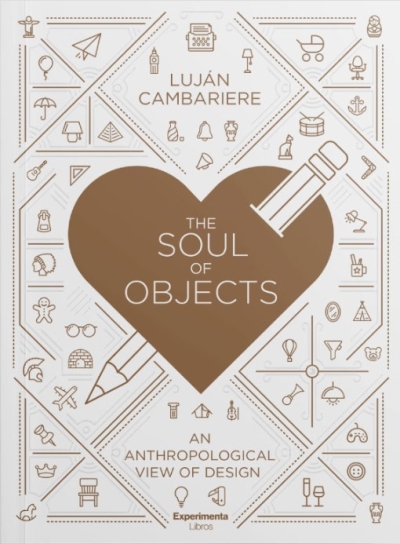
The Soul of Objects. An Anthropological View of Design

Why does design matter?
This is one of the central questions posed by Luján Cambariere, and from her answer many paths unfold. Design shapes our everyday lives at every moment—from the possibilities offered by something as simple as a spoon to air travel and the development of surgical instruments that protect our health. For this reason, the relationship between design and people is far more significant than we tend to assume.

This importance becomes evident when we assign a special, almost symbolic value to certain objects we call “talismans.” Objects do not merely serve a function; they carry energy, meaning, and a magic of their own—an aura.

From this perspective, Cambariere turns her attention to design from the Global South, uncovering the distinctive DNA that defines it: imagination as a driving force, the reuse of raw materials, and a commitment to conscious consumption.

A new paradigm has emerged in design, with Latin America at its forefront. It is grounded in the dialogue between craft and design, in fair trade and environmental responsibility, and in an ethical framework that takes precedence over aesthetics alone. The role of the designer has shifted because the context itself has changed—and today, the South has become the new North.

The Soul of Objects is an essential book for understanding the transformations currently reshaping the field of design and the evolving relationship between people and the objects that inhabit the contemporary world.


Lujan Cambariere
The Soul of Objects. An Anthropological View of Design
Experimenta Libros, 2026, 978-84-19555-56-4
25,00 €