










Direkt zum Inhalt

Veranstaltungen

Warenkorb

  • Alain Badiou

    Wofür steht der Name Sarkozy?

  • gerade nicht auf Lager
    Donna Haraway

    Die Neuerfindung der Natur. Primaten, Cyborgs und Frauen.

  • gerade nicht auf Lager
    Stefanie Schulte Strathaus, Florian…

    Wer sagt denn, dass Beton nicht brennt, hast Du’s probiert?

  • gerade nicht auf Lager
    Henri Lefebvre

    Writings on Cities

  • Loretta Napoleoni

    Rogue Economics. Capitalism's New Reality

  • AD

    AD 174. Vol. 75. Nr. 2. Samantha Hardingham. The 1970'…

  • An Architektur

    An Architektur 18: Camp for Oppositional Architecture:…

  • Johan Frederik Hartle

    Der geöffnete Raum. Zur Politik der ästhetischen Form

  • An Architektur

    An Architektur 16-17

  • Vera Beyer, Jutta Voorhoeve, Anselm…

    Das Bild ist der König. Repräsentation nach Louis Marin

  • An Architektur

    An Architektur 15 / FFM 11: Europäische…

  • An Architektur

    An Architektur 14: Camp for Oppositional Architecture

  • An Architektur

    An Architektur 11-13: Theorie und Praxis der Kartografie

  • An Architektur

    An Architektur 10: Gemeinschaftsräume

  • An Architektur

    An Architektur 04-09: Krieg und die Produktion von Raum

  • IDEA Magazine

    IDEA 296. Books <preposition> graphic design

  • IDEA Magazine

    IDEA 293. Stanley Donwood / Vacances. DD-DDD / Dimensions…

  • gerade nicht auf Lager
    An Architektur

    An Architektur 01-03

  • Pro qm

    Gutschein / Voucher

  • Siegfried Kracauer

    Das Ornament der Masse. Essays

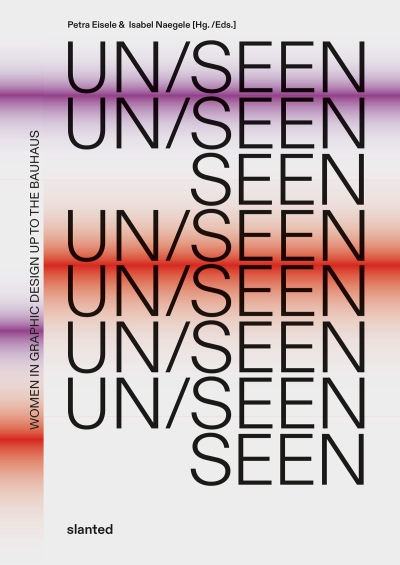
  • Un/seen Cover

    UN/SEEN. Women in Graphic Design up to the Bauhaus

    If we want to rewrite the history of design, we must take its beginnings into account. The period before the Bauhaus, the importance of “arts and crafts,” and, above all, the achievements of women in graphic design have long been neglected in the presentation of German design history.

    UN/SEEN brings together previously unknown material and sheds light on the lives and work of female designers in the fields of book design, poster design, typography, illustration, and packaging. In ten chapters, UN/SEEN documents the latest research findings and uses numerous examples to show how successful and self-confident the first generation of female graphic designers was and which discourses from that time still shape the discipline today.

    UN/SEEN questions traditional narratives and contributes to the discussion about design and gender with new role models. The book is accompanied by the project platform ↗ www.unseen-women.design.

    The publication is available in both an English and a German edition.


    Petra Eisele, Isabel Naegele (Eds.)
    UN/SEEN. Women in Graphic Design up to the Bauhaus
    Slanted Publishers, 2026
    48,00 €